



Multiculturalism is the false prophet of celebrating difference, presented as the ultimate engine for “diversity”.
In practice, it is a factory of global homogenisation, and a solvent that erases local cultures. Cities like Sydney, Toronto, and London now compete to be the top “global hub”, which is no unique identity at all.
There is no preservation of character under the hegemony of the global hub, only its erasure. The officially multicultural city is uniform across continents, like clones of each other in all but the most superficial ways. It sounds contradictory on the surface, but makes perfect sense once it is understood that multiculturalism as a policy and identity is inherently anti-cultural.
The multicultural city has nearly identical urban design, and its bureaucrats and professionals weaponise the same moral vocabulary, deploying terms like “inclusivity” and “openness”. It has all the charm of an airport lounge, justified with the same slogans, decorated with the same grey glass-and-steel architecture, and guided by the same self-reinforcing sensibilities.
It makes people docile, and rewards them with sensory appeasement, like supposedly exotic cuisine. A fusion rice bowl is the consolation for the disappearance of the environment you grew up in.
In Canada, it first came to the Anglo cities like Toronto and Vancouver. Now it has broken linguistic and cultural containment into Quebec. For decades, Montreal was the metropolis of the Québécois. Now, as Kevin Paquette outlined last month, the city has changed. It mirrors the anti-culture that took over Toronto, and has no use for the legacy of those who built it.
Paquette described how Montreal has become a “filter” that promotes an internationalist identity that renders it alien to Quebec’s exurban regions. Bloc Québécois (BQ) leader Yves-François Blanchet has warned that “two Quebecs” have emerged, which are disconnected and alienated from each other.
Jean-François Lisée has gone further, and written of the emergence of an “anti-Québécois identity” in an increasingly diverse Montreal. In public schools, students openly mock the Québécois, and English is more commonly spoken than French in the hallways.
Lisée writes that an alternate, anti-Quebec dynamic now exists among some newcomers. In this dynamic, attachment and assimilation into the Québécois identity become contemptible.
This is the essence of multiculturalism when treated as an end in itself. “Inclusion” is the hollowing out of the obligation to belong, and the transformation of identity into a lifestyle choice.
Not even Quebec City is immune. It was long a living, breathing exception to Canadian multiculturalism, with a dominant Québécois culture and ethos. However, the mayor, Bruno Marchand, has embarked on a mission to destroy what makes it distinct.
The following sentence is from a glowing feature in the Globe and Mail last week: “Mr. Marchand says his hometown’s traditional pure laine image is changing, and it’s a good thing.”
Quebec City’s inherited way of life is being targeted so that it can become just one more global hub. The city’s established symbols, traditions, and habits stand in the way. It takes remarkable ideological and moral heavy lifting to dismiss provincial identities as unworthy, and as something that must inevitably be replaced.
The city still carries deep meaning for francophones across the country.
“I’ve never lived there, or in the province of Quebec, and yet it speaks to me profoundly,” said one resident of Ontario I spoke to. “This is where my ancestors landed 400 years ago and it still bears witness to them.”
What was the point of Quebec’s 400-year effort to survive if it becomes a mirror image of what has happened to the rest of Canada?
Ontario, and the rest of Anglo-Canada, have long been conditioned to regard its own inheritance as unworthy of loyalty or respect.
Anglo-Canada is bound up in the history of the British Empire, the most fashionable whipping boy of leftist academics and activists. Due to the institutional power of these malcontents, it naturally follows that Canada’s historic and cultural self is treated as an embarrassment, whose memory is a problem that must be solved, or rather dissolved.
Toronto is the best example of how multiculturalism does not leave a mythical mosaic, but instead produces a complete rebranding of a city into generic modernity.
Once the “Belfast of Canada”, Toronto enjoyed firm British and imperial institutional power wielded by the Irish-Protestant Orange Order. It set the terms of morality, established patronage networks, and effectively ran the city until after the Second World War. They waged a permanent campaign against their Irish-Catholic counterparts, battling for control of the city’s spaces, and often with violence.
That changed in the postwar era, when the old order became the enemy of the New Left amid a flowering of multicultural ideologies in Ottawa, and the liberalisation of immigration.
This month marks the 61st anniversary of the replacement of the old Red Ensign as our national flag in 1965. With it went a symbolic link to the country’s founding, and to the thousands of men who died under that banner in the world wars. It was a major part of the top-down attempt to refashion Canada along the lines of rapacious modernity, Toronto included.
In Toronto, the Belfast of Canada: The Orange Order and the Shaping of Municipal Culture, author William J. Smyth wrote, “The starkness of old-fashioned sectarianism was replaced by the dynamic complexity of a new multiculturalism that irrevocably expanded horizons once bounded by attitudes transferred from an introspective corner of the British Isles.”
Sectarianism is deeply undesirable, but Toronto’s Catholic-Protestant conflict was at least bounded by a particular and distinct municipal culture that was tied to Canada’s Founding Peoples and place in the British Empire. It was something that made Toronto unique in the world, but it now belongs to a city that may as well not exist.
The movement against historical Canada carries a deeply ideological character.
Toronto’s Yonge-Dundas Square was renamed after its original namesake, Henry Dundas, 1st Viscount Melville, was assailed with bogus charges of being a proponent of slavery. The towering South African War Memorial has less meaning to the city’s current administration than the Aztec ruins of Mexico City.
The Fort York Guard, a historical re-enactment society that pays tribute to the redcoats who defended Upper Canada during the War of 1812, was defunded by the city due to not being “inclusive” enough.
Now, Toronto’s left-wing mayor, Olivia Chow, lauds the city’s “diversity” and “multiculturalism” in canned speeches that could have been delivered by Mayor Sadiq Khan of London, or Melbourne mayor Nicholas Reece.
Melbourne itself was also once a quintessential imperial British city. Now, its bureaucracy is slowly but surely trying to rename it “Naarm”, which apparently was the Aboriginal term for the area prior to colonisation. There was no Australia before colonisation, and symbols of that in Melbourne, like memorials to the explorer James Cook, are destroyed by vandals without repair or punishment.
There is clearly an unspoken accord between these captured bureaucracies and criminal activists, both united in their goal of eliminating the memory and culture of the people who built those cities and countries in the first place.
In Britain, London is the archetype of this transformation. Monty Python legend John Cleese opined in 2019 that London was “not really an English city any more”. Cleese touched a raw nerve by calling into question what cities are, and what purpose they serve.
A progressive will respond that diversity is the essence of the modern city, that it is an unambiguous strength and, therefore, the more of it, the better. There is a trade-off, however, and that is the loss of what is local.
Even writers at the liberal Washington Post have conceded that London has drifted towards shapeless uniformity, rather than being a city for the English people. It contains the same café brands, luxury-brand shops, and interchangeable restaurants that make cities blur into each other.
Many have tried to make the case that London was actually always diverse.
Writing in The Critic, Sam Bidwell exposed this as a fraudulent revision of recent times. Such narratives distract from the rapid, staggering scale of London’s cultural and demographic change in the 21st century, due to immigration and the cementing of anti-national ideas.
The key point is that multiculturalism flattens as much as it diversifies. It makes every place “open”, and pats itself on the back because it no longer resembles itself.
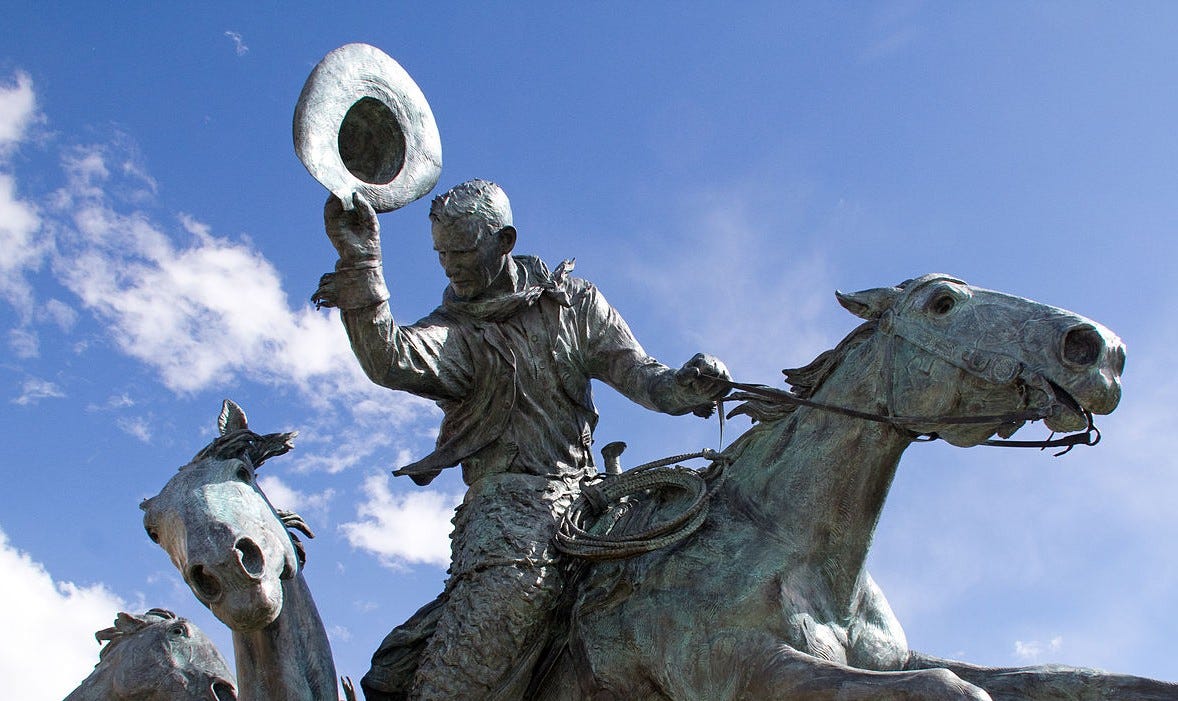
Calgary is another Canadian example. In the progressive imagination, Calgary’s combination of cowboys, individualism, and the energy industry is crude, parochial, and ignominious.
Much like Bruno Marchand’s Quebec City, people like former mayor Jyoti Gondek believed that Calgary’s future lies in becoming more like Toronto or London. Gondek, who moved to Calgary as a young adult, lamented the “cartoon image” of Calgary as an oil city that should strive to be something else.
Oil and gas are perhaps the most important tangible pillar of Canada’s economy. There is no shame in that to justify Gondek’s transformation. Fortunately, she was rightfully ejected from office in the 2025 municipal election.
When all the verbal decoration is stripped away, the payoff of the bargain is merely consumer variety, like more flavours of noodles and more chains of cheap, imported foreign goods. The cost is the erosion of a historic identity and the legacies built up over generations. Food does not justify this loss, and it speaks volumes about the shallowness of many people’s sensibilities that they think otherwise.
What would we be left with if our taste buds disappeared permanently?
If asked who you are, your lineage, family history, and loyalties would be top of mind. What will you hand forward to your children and grandchildren so that they can belong?
Canadians deserve to be important in their own society, in their own language, and within old traditions and identities that helped build this country.
This is a very normal and healthy impulse. The current dominant ideology that treats the impulse as abnormal is what is shameful. An abstract identity of the “global citizen” is one that makes us all identical, and that makes for a decidedly non-diverse world.
The debate in Quebec over what Montreal and Quebec City should look like is central to the future of Canada. Attempts to “metropolise” Quebec City into a generic municipality, and the emergence of anti-Québécois sentiment in Montreal high schools, are symptoms of the attempt to re-engineer belonging into something replaceable.
Canada’s old provincial and local identities are legitimate, and should be defended by grassroots movements, elected politicians, and citizens themselves. The state has the power to reinforce and protect them. All that is lacking is the will.
Our cities should not become a single, unsophisticated chain where the only differences are weather and real estate prices.
Once a culture disappears, it is rarely recovered, and this is the bitter truth that multiculturalists will never admit.
Geoff Russ is the Editor-at-Large of Without Diminishment. He is a contributor to a number of publications, including the National Post, Modern Age, and The Spectator Australia.

“It mirrors the anti-culture that took over Toronto, and has no use for the legacy of those who built it.”
Kevin Paquette.
Imagine being so committed to being something else, for the benefit of someone else, that, in the process, you lost all that you once held dear.