


All over the world, the divide between metropolitan areas and rural regions is widening. Large cosmopolitan cities, whose mission is to connect nations, advance societies, and ensure the economic development of states, have gradually ceased to be solely engines of progress. They have become filters, and sometimes even parallel worlds.
Although they strive to be “international”, these cities end up being isolated. A rift inevitably widens when a city is a global platform located on its territory, instead of an expression of a people.
Rather than being an international reflection of the most distinctive features of the nation it represents, the contemporary metropolis also tends to promote an internationalist, progressive, and multiculturalist vision of society to its own citizens, to the detriment of the national characteristics it is supposed to embody.
Unfortunately, this dynamic has not spared Quebec. It is clearly evident in the increasingly tense relationship between Montreal and Quebecers in the regions.
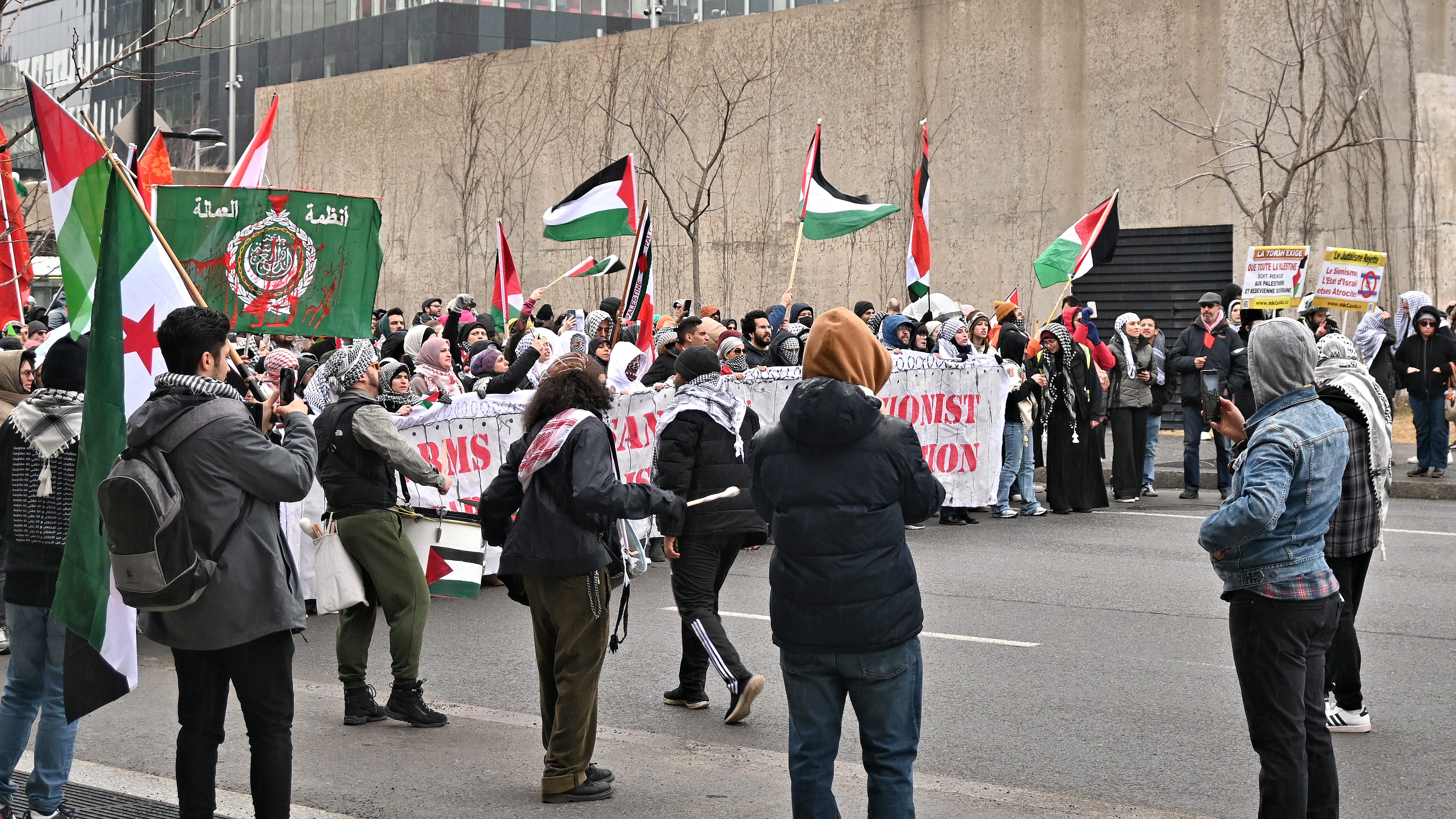
Montreal is now absorbed by international conflicts, left-wing activism, and multiculturalism, and, like many other international cities, seems to have forgotten where it came from.
A divide has slowly developed between Montreal and the rest of Quebec in recent decades. It is primarily symbolic, but it is also geographical: Montreal is an island in the middle of the St. Lawrence River and, increasingly, a mental island. Many Montrealers openly admit that they almost never leave the island, either because they have no interest in doing so or because they have a certain indifference to what lies beyond.
In concrete terms, a modern Montrealer who works downtown and lives on the island is more likely to have daily contact with people from Toronto, Vancouver, London, or New York than with people from Quebec City, Saguenay, Drummondville, or Trois-Rivières.
This reality is also true for Quebecers in the regions. Many of them no longer even want to venture onto the island of Montreal. They feel that the city has become a parallel world that no longer represents them, that no longer speaks French except as a “reasonable accommodation”, and that encourages cultural and social trends that seem disconnected, even foreign, to their own reality.
This divide is now visible in everyday life. In Montreal, it has become normal to be greeted spontaneously in English, to hear “Sorry, I don’t speak French” without any awkwardness, or to frequent businesses where English is the language of choice, even outside the traditionally Anglo West Island. This reality is virtually non-existent in the regions, where French remains the common language, not an option.
Similarly, as imported conflicts take more and more space within the metropolis, it also tends to want to impose on the rest of Quebec a vision of society shaped for the island of Montreal. This includes a war on cars, accelerated densification, and restrictive urban planning, often to the detriment of the needs, pace, and lifestyle of the regions.
Conversely, French-speaking Quebecers in the regions aspire to put down roots, not withdraw. They want to be connected to their world, their family, their community, familiar faces, and places that hold memories. They are less inclined to follow the movement of the world than to give continuity to who they are. They want order, not out of rigidity, but because order allows for stability, transmission, and consistency. They want to be able to pass on to their children a moral foundation, a culture, a language, and a way of life that is older and stronger than the latest trends.
For them, Quebec is a legacy passed on to them, which is far more meaningful than an abstract concept or ideological platform. Quebec is their living, inherited environment containing a fabric of relationships, a collective memory, and a promise made to future generations.
Quebec is not a society like any other. It is a minority nation in North America, shaped by four centuries of cultural, linguistic, and social resistance. It has been built against the tide and has had to be protected and passed on from generation to generation. A fragile nation cannot afford to have a metropolis detached from who it is. It needs a metropolis that is proud, rooted, and aware of its historical responsibility: a city that speaks to the rest of the world, yes, but on behalf of its own people.
Montreal does not have to be less open or less modern, but it must proudly assume and affirm its Quebec identity. A national metropolis is the symbolic heart of a nation. When that heart looks down on its nation and detaches itself from those it is supposed to represent, our identity is greatly weakened.
Kevin Paquette is a consultant at Crestview Strategy. He was a political advisor to Quebec's Minister of Public Security and president of the Coalition Avenir Québec's youth wing. He also worked in the Conservative Party of Canada's war room during the 2019 federal election campaign.

And not a word about the ethnic and cultural gaps developing in all our big cities, an ever growing separator.