
Geoffrey Moyse: The deceptive UNDRIP scheme is unravelling in B.C.
David Eby's secretive bid to advance UNDRIP is falling apart under public scrutiny.


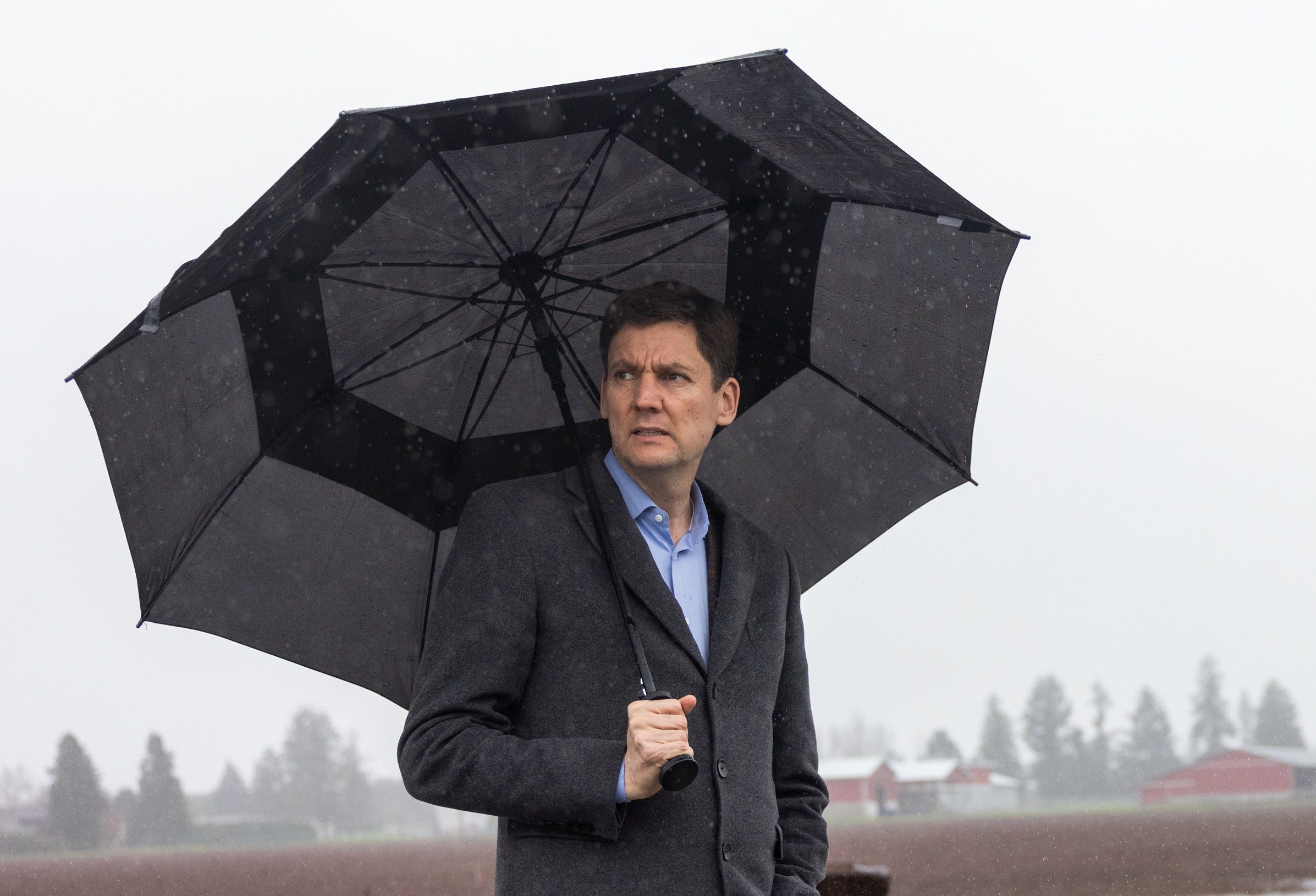
“Toxic” and “overreaching” were some of the words used by B.C. Premier David Eby in reaction to the B.C. Court of Appeal decision in Gitxaala v. British Columbia, a judgment that affirms that a proper interpretation of the province’s DRIPA legislation and section 8.1 of the B.C. Interpretation Act, advanced by David Eby himself when he was the province’s Attorney General, renders UNDRIP justiciable and enforceable as the law in British Columbia.
(UNDRIP is the United Nations Declaration on the Rights of Indigenous Peoples, while DRIPA is British Columbia’s Declaration on the Rights of Indigenous Peoples Act, the specific provincial legislation passed to implement UNDRIP’s international standards into B.C. law.)
So outraged is the Premier that he is seeking both to appeal the Gitxaala decision to the Supreme Court of Canada, which is a very unwise legal strategy, and to introduce amendments to the legislature to try to “court-proof” DRIPA from any further judicial interpretation, thereby seeking to undo the legal effect of the judgment in Gitxaala.
We need to be very clear as to what is happening here.
During the debate on DRIPA in the legislature in late 2019, government ministers of the day waxed lyrical that DRIPA and UNDRIP created no new rights, had no legal force, did not apply to private land, and did not provide a veto. Those assurances were used to justify passing DRIPA, which resulted in the B.C. Opposition unanimously supporting the legislation. It turns out that the government’s assessment and promises were neither correct in substance nor valid legally.
Much has been written lately about DRIPA, some of it wrong. Prior to the B.C. Court of Appeal decision in Gitxaala, some DRIPA defenders insisted it was merely a “process” piece of legislation that bound the government to an arguably undemocratic joint government and Indigenous leadership arrangement, set out in section 3, to evaluate every B.C. statute for conformity with the 46 Articles of UNDRIP and then amend statutes as deemed necessary to create that conformity.
DRIPA itself, though arguably highly undemocratic and perhaps unconstitutional, is not the real problem in this province. The real problem is that DRIPA has been effectively employed as a “smokescreen” by the B.C. NDP and certain of its allies, while the government, secretly and with no explicit public mandate, imposes the Articles of UNDRIP throughout B.C. as a fundamental matter of policy, as though they have the force of law.
Let’s be clear, this is a devious political manoeuvre, much of which is not underpinned in law by DRIPA or, more importantly, by Supreme Court of Canada jurisprudence at all.
Notwithstanding statements made to the legislature in 2019 to get DRIPA passed, the NDP government immediately chose to implement a policy approach to UNDRIP throughout B.C. under which UNDRIP Articles would be applied by the government and the public service as though they were, in fact, the law in this province, notwithstanding the fact that they are inconsistent in many respects with Canadian constitutional law.
In the wake of recent court decisions, there is no indication that the government’s policy approach has changed or that the Premier is thinking about backing away from it, even though there is now much greater public scrutiny of what the government has really been up to since 2019.
The Eby government claims to be upset that UNDRIP is now being applied by the courts as the law in B.C., which it knows will create utter chaos. What has upset it more, however, is that the courts have usurped the NDP government’s desire to quietly and secretly implement UNDRIP everywhere in the province as a matter of policy, a policy that they would like to be viewed as law but without being legally enforceable by judges.
This amounts to a policy of subterfuge by a government that has shown an inclination towards deception on matters concerning First Nations. It appears that a law is not a law unless the B.C. government says it is a law, but some laws, like DRIPA, can be used as a false “front” to allow the covert implementation of a complex UN-based policy that is clearly unfit for the Canadian context, with no one being the wiser.
Under the guise of DRIPA, which, to be clear, does not in most cases authorise this, the current government and its predecessor have systematically sought to apply the principles of UNDRIP in practice and policy throughout B.C. since 2019. Forget whatever former Indigenous Affairs Minister Scott Fraser may have said to the contrary in the legislature, those promises were quickly forgotten.
Egregious examples can now be seen where public servants require Indigenous consent before they will issue permits or make statutory decisions, even in cases where section 7 agreements under DRIPA are not in place. There are also many examples of government insisting that no permits will be issued unless proponents enter into agreements with local First Nations.
Claimed traditional Indigenous territories are being treated by government as if they are entirely owned by Indigenous people, as contemplated in Article 26 of UNDRIP, and subject to the supposed legal jurisdiction of the Indigenous territorial claimants, despite neither of those conceptions being legally valid under Canadian constitutional law as set out in previous Supreme Court of Canada jurisprudence.
This policy approach provides for government to treat Indigenous people, whose on-reserve populations amount to less than 2 per cent of the overall B.C. population, as having equivalent legal and jurisdictional authority to the government itself, which represents 5.7 million B.C. residents, over their entire claimed traditional territories in decision-making contexts and land use planning schemes, thereby subjecting such decisions and processes to the requirement for Indigenous consent, which, for the most part, is not legally required.
Finally, the Eby government’s deceptive plan to behave as though the Articles of UNDRIP are the law across British Columbia, while trying to keep the courts from applying them as such, is now unravelling under the hot lamps of increased public scrutiny.
It is well past time that this duplicity be fully understood by all residents of this province, before the ideology-driven and largely unlawful chaos we are now witnessing across the land base becomes completely untenable and effectively sinks the B.C. economy.
Geoffrey S. Moyse, KC, is a retired senior lawyer who served as legal counsel to the Province of B.C., advising six successive governments on Aboriginal law over more than 30 years. He is principal at Moyse Law and an advisor to the Public Land Use Society.

When I talk to folks about Canada being broken, this is the type of damage of which I speak.
We have an international body making policy that is co-opted by a Provincial Government, policy that is implemented as if it were law, thereby creating a series of pseudo sub-Governments whose goals are at times antithetical to the goals of the Provincial Government and the people, all the while trying to interact in good faith with the Federal Government.
This is no way to run a Country.
The BC economy is already sunk. The latest court ruling only makes it even worse. BC is finished, unless a massive reset occurs very quickly.