
Kate Marland: An appeal to the Crunchy Cons
The 'Based Patriot Mum' has emerged as a political force, and as an antidote to conservative struggles with female voters.


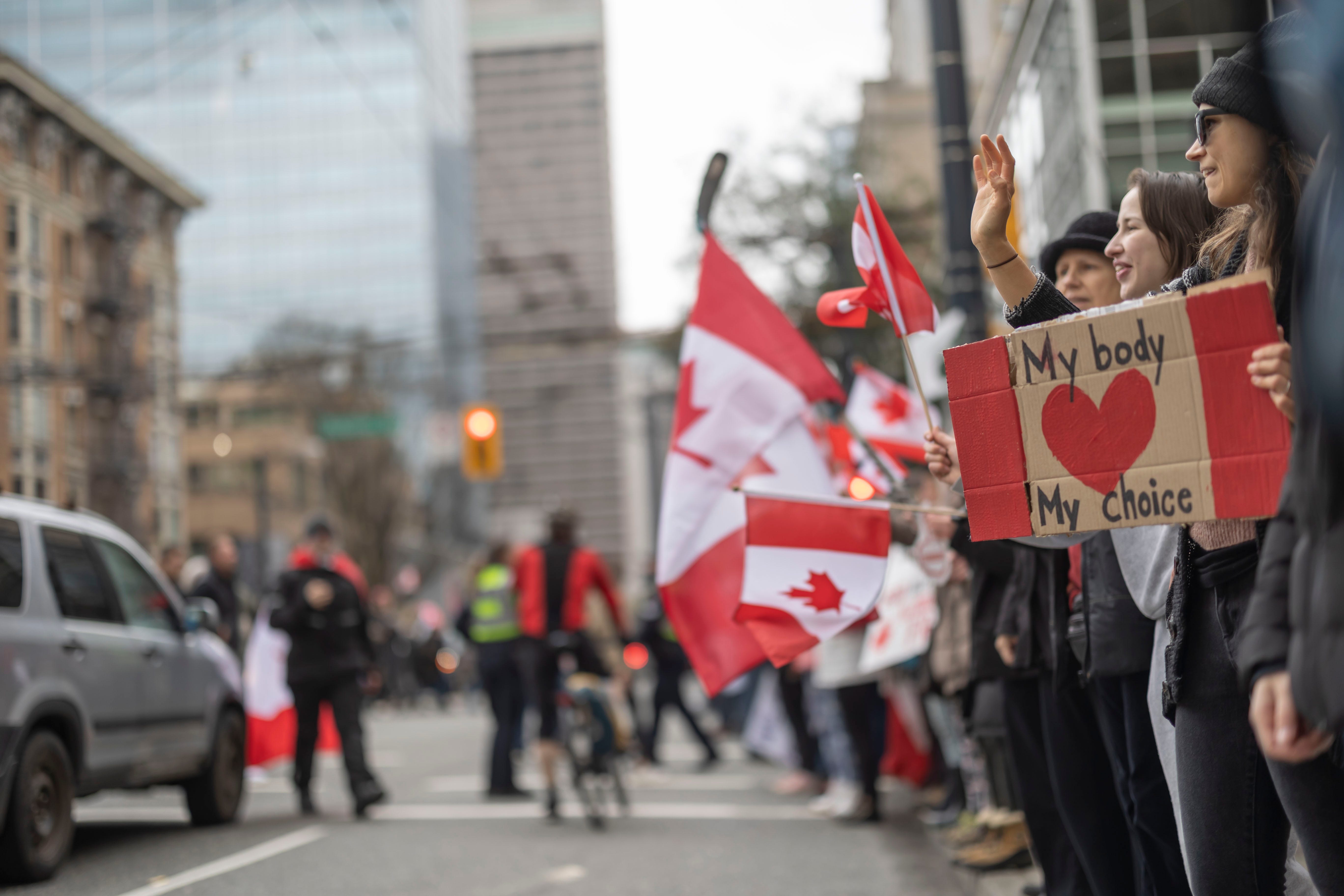
There are many in our movement who view the events of 2020 to 2022 as something to be swept into the dustbin of history.
For those who fell into an arm-in-arm death march with our Liberal government in response to the pandemic, reflecting on that period is not a priority. However, the faction of the conservative movement that crystallised in direct response to the pandemic remains a critical group with an important voice that our current leadership should fear losing.
I am referring to the “Based Patriot Mums”. The Based Patriot Mums (BPMs), or crunchy conservatives, have existed for decades. They are brought together by concern about the quality of the Standard Canadian Diet, radicalised by the astronomical increase in mystery childhood illnesses, and alarmed by the increased hegemony of Big Tech and Big Pharma. It was the BPMs who were quick to sniff out what was suspicious about our government’s pandemic response. As the government quickly eroded our civil liberties, the BPMs were right to have their backs up at the suggestion that we “trust the science”. It is the BPMs who have been sounding the alarm about the impact of social media and technology on young people, calling for bell-to-bell smartphone bans to improve academic outcomes and social media bans for under-16s.
Over the years, the BPMs may have had Green Party sympathies, especially when it came to looking for candidates who would fight for reduced pesticide use, reduced pollution, or the promotion of organic food. But the pandemic threw the BPMs straight into the conservative camp, and that shift was a critical part of Pierre Poilievre’s landslide win in the 2022 leadership race. Poilievre’s supporters were six times more likely to be unvaccinated than Jean Charest’s supporters. Notably, 79 per cent of Charest supporters received boosters, compared to 38 per cent of Poilievre supporters.
In tandem with the alignment of the BPMs with the Canadian right, the Make America Healthy Again (MAHA) movement emerged, generating greater interest in—and action toward—critically assessing the state of American health and wellness. One of the keys to Trump’s victory in 2024 was the coalition formed after he struck a deal with Robert F. Kennedy Jr. and brought the MAHA mums into the fold. Aligning with MAHA was a strong contributing factor in bringing a record number of female voters under 50 to Trump, with Trump 2024 doing 22 points better than Trump 2016 with women aged 18 to 49.
Top issues for MAHA voters include removing pesticides and chemicals from the food supply, investigating the childhood vaccine schedule, and improving the Standard American Diet, much like the concerns of the BPMs. By aligning with RFK Jr., Trump was able to activate the crunchy conservatives.
One of MAHA’s major supporters is Joe Rogan, and Poilievre recently joined his show, during which the conversation turned to a selection of loosely “wellness”-related topics. As someone who identifies as a crunchy conservative, I was pleasantly surprised by Pierre’s broad support for, and understanding of, the importance of eating well and exercising regularly.
My pleasant surprise quickly turned to disappointment. When pressed by Rogan about whether we use it in Canada, Poilievre followed up with, “Yeah, I don’t know anything about glyphosate.” Mr. Poilievre likely does not read CBC, so it is possible he did not read its December 2025 piece reporting that the journal Regulatory Toxicology and Pharmacology retracted the paper often cited as evidence that glyphosate is safe for humans. The journal noted that there is evidence suggesting that employees of Monsanto, the manufacturer of the pesticide Roundup, whose key ingredient is glyphosate, may have helped to ghostwrite the article, and that Monsanto may have paid the authors of the study.
In 2017, Health Canada reviewed glyphosate, citing this now-retracted study as evidence that the chemical was “unlikely to pose a human cancer risk” and approving the use of glyphosate-based herbicides until 2032. Despite the retraction of the study, Health Canada has denied any risks, maintaining that the approval will stay in place.
This conversation highlighted the growing divergence between Poilievre and the BPMs. It also paints an interesting point of comparison with the Trump White House’s relationship with the MAHA coalition. Since taking office, Trump has helped the MAHA mums secure many key victories, including changes to the Food Guide, a reassessment of the childhood vaccine schedule, and the removal of toxic food dyes from key products. In comparison, Poilievre seems to have abandoned his outreach to the BPMs, and any discussion of medical freedom or improving health outcomes is long gone. While RFK Jr. is somewhat of a lightning rod for controversy, to dismiss his actions and impact purely out of contempt for the bear incident or some of his kookier anecdotes is simply a bad excuse for inaction.
Health and healthcare are consistently among the top five issues for Canadians. A December 2025 Abacus poll found that “the health care system” was something that should be in the top three priorities for a federal government right now. For a movement and party that struggles with female voters, we are not in a position to let cowardice take the wheel when it comes to addressing the issues that female voters care about. Women face the brunt of our failing healthcare system, with 74 per cent of Canadian women feeling their health concerns are not taken seriously. It’s easy to dismiss the impact of MAHA and the BPMs as fringe, anti-vax, tin-foil-hat material, but the concerns about wellness underpinning these movements are real and have resonance across the border.
Wellness and preventive healthcare rarely take the stage when it comes to policy in Canada. Our made-in-Canada healthcare solutions typically focus on streamlining access to pharmaceuticals and trying desperately to catch up by providing sufficient care for a rapidly ageing and increasingly sick population.
Is it not worth trying to improve our general wellness by advocating against the ultra-processed foods that Poilievre himself admits to avoiding in his own diet?
If we have a leader who acknowledges the positive impact of such a movement, would it be such a bad thing to recommend that for the rest of us, rather than washing our hands of it and being just the “leave me alone” party?
Kate Marland is Deputy Editor at Without Diminishment. She presently runs youth outreach for the Canada Strong and Free Network, and formerly oversaw the Montreal Economic Institute’s Liberty and Leadership program. She also worked as a commercial litigator in Ottawa.

Let's see what battle they pick. With regard to healthy, no-harmful-additives food: Personally, I would like to see more commitment to improving local food supply chains that give small farms and food processors a fighting chance. Until we regulate and restructure things better, the healthier options come from far away and are more expensive in general.