Étienne-Alexandre Beauregard: The political efficiency of the culture wars
Those yearning for a politics without identity issues likely live in the wrong era.


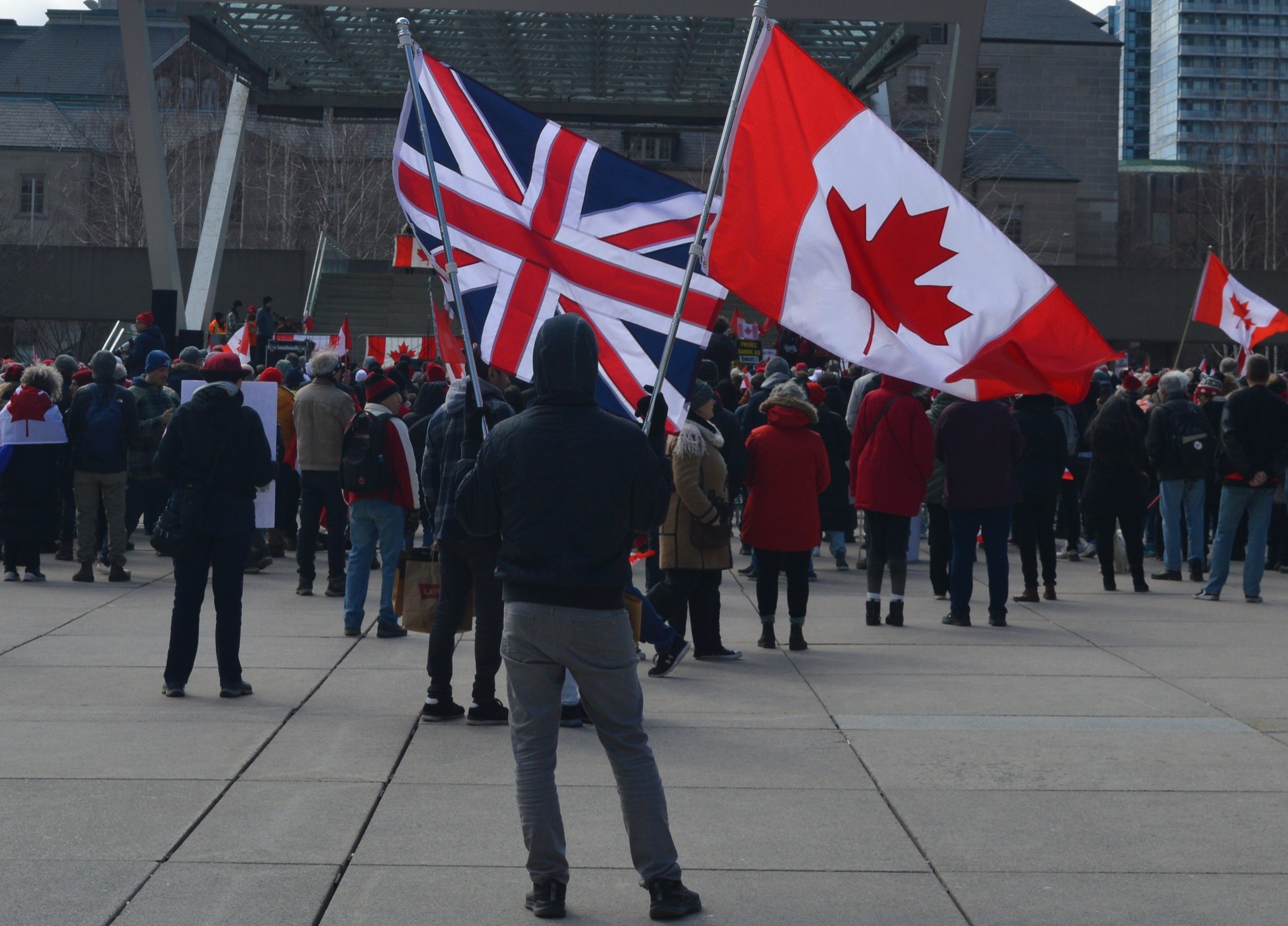
We live in the era of identity politics. For the past decade or so, issues related to immigration, “deconstruction,” and, more generally, minority demands have dominated political discourse, to the point of becoming its main axis of polarisation, due to their emotional and symbolic nature.
Yet, particularly on the right, many question the relevance of addressing these issues in political debate. Are they not too “divisive” or too far removed from “bread and butter” issues? Is the right harming itself by defending national identity and common sense in the face of excessive “accommodations”?
Particularly around 2015, some had their doubts. Just remember the defeat of the Parti Québécois in 2014, which some hastily blamed on the Quebec Charter of Values, and the defeat of the Conservative Party of Canada in 2015, in the wake of the debate over the niqab during citizenship ceremonies. In Quebec, the tide turned decisively after the election of the Coalition Avenir Québec, which turned nationalism into a politically winning formula, to the point where even the Quebec Liberal Party is now trying to claim it as its own. In English Canada, the Conservative Party has historically been more reluctant to address cultural issues, despite a recent shift on immigration.
To settle this debate on the political effectiveness of “cultural conservatism,” to call it that, it is interesting to put it into perspective with a fascinating article recently published by Sean Speer in The Hub, where he very aptly theorises a “theory of political effectiveness in campaign platforms.” In other words, what makes a policy “effective” or not for political parties?
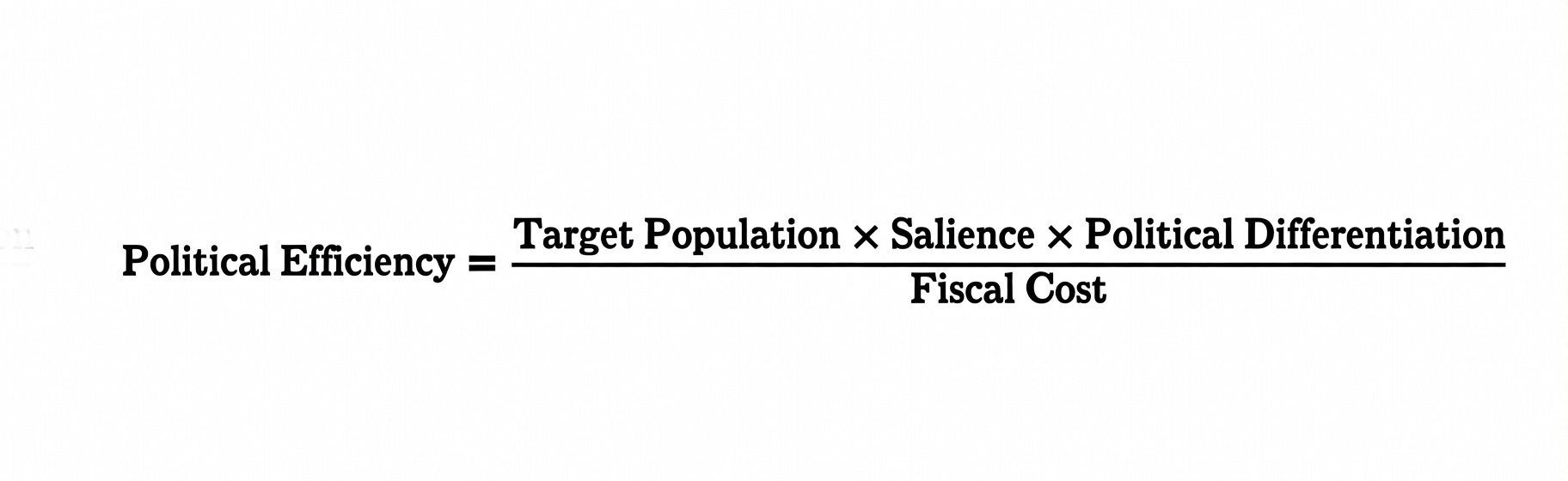
Speer’s proposed formula can be summarised as follows: the political effectiveness of a given measure can be calculated by multiplying the size of the target population (how many people support the measure?), the salience of the issue (how much it is discussed in public debate), and political differentiation from other parties (whether the others disagree), divided by its fiscal costs. In other words, the most effective policy in an election campaign would be one that is supported by a large majority, is at the centre of the debate and thus likely to influence the vote, but is not supported by any other party, and does not cost too much to implement. More or less, this theory alone explains why the right wins when it takes conservative positions on cultural issues.
First, identity issues are more prominent in the media than most other issues, for better or for worse. Unlike economic issues, where one can split the difference, they quickly become a zero-sum game due to their symbolic weight. It is difficult to topple a statue or create unisex washrooms only halfway.
The political differentiation factor is also very high, as contemporary political debate has substantially realigned itself around these issues.
In Quebec, for example, the Parti Québécois and the Coalition Avenir Québec share very similar voters, even though one is a centre-left sovereigntist party and the other a centre-right autonomist party, because they essentially hold the same positions on identity issues and are opposed to wokeness. Similarly, NDP voters at the federal level had no problem voting for Mark Carney, who is substantially more centrist than they are on economic issues, because they reject, above all, what the Conservative Party represents culturally. In virtually all Western countries, the axis of cultural polarisation is very sharp and acts as a structural determinant of voting behaviour.
As for the size of the target population, this alone explains why the left has an advantage in avoiding identity issues, while the right inevitably gains from them. On these issues, the population is roughly divided between two-thirds conservatives or moderates and only one-third progressives. Not everyone is equally motivated by these issues, but high-profile incidents such as the “equity cards” at the NDP leadership convention or the pro-Palestinian protests in Montreal provoke, to varying degrees, rejection from the majority of the population, who do not identify with them. A politician defending them too closely would commit political suicide in the eyes of ordinary people, while one who condemns them will be seen as embodying the public’s exhaustion in the face of these excesses.
Ultimately, such ideological stances have a fiscal cost of zero. Banning religious symbols for government employees, designating who participates in women’s sports competitions, or imposing a “values test” on new immigrants costs the public treasury virtually nothing, despite significant symbolic and social implications. We are therefore dealing with maximum, or nearly maximum, political effectiveness, whether or not one agrees with these measures.
Let us not see this as an “electoral gimmick” or a magic solution, however. If these issues generate so much discussion, it is because they genuinely resonate with voters, who are concerned about the erosion of social cohesion and the common good in favour of sometimes intransigent groups. Conversely, it is worth noting that hammering the same nail repeatedly does not guarantee political success at any cost. The CAQ government’s Bills 94 and 9, which followed Bill 21, undoubtedly enjoyed public support but did not have nearly the same symbolic or electoral impact for the government, for all sorts of reasons.
Ultimately, those who would like political discussion to be free of identity issues are likely living in the wrong era. Even historically, politics has always carried a symbolic weight that far exceeds mere accounting matters. More broadly, those who think they can help the right win by trying to prevent it from addressing identity issues, which nonetheless occupy an unavoidable part of our societal debates, are not great political strategists, but exactly like progressives who have not yet realised that their emphasis on these themes is largely responsible for their loss of popularity among a substantial portion of the electorate, all over the world.
Étienne-Alexandre Beauregard is an author and researcher at Cardus. His latest book, Anti-Civilization: Why Our Societies Are Collapsing from Within, was published in September 2025 by Presses de la Cité. He was formerly a speechwriter and strategic planning advisor in the office of the Premier of Québec.