
Geoffrey Moyse: The First Nations Leadership Council wants co-governance, or else
Control and intimidation tactics from the FNLC are preventing the B.C. government from making amendments to DRIPA and other legislation.


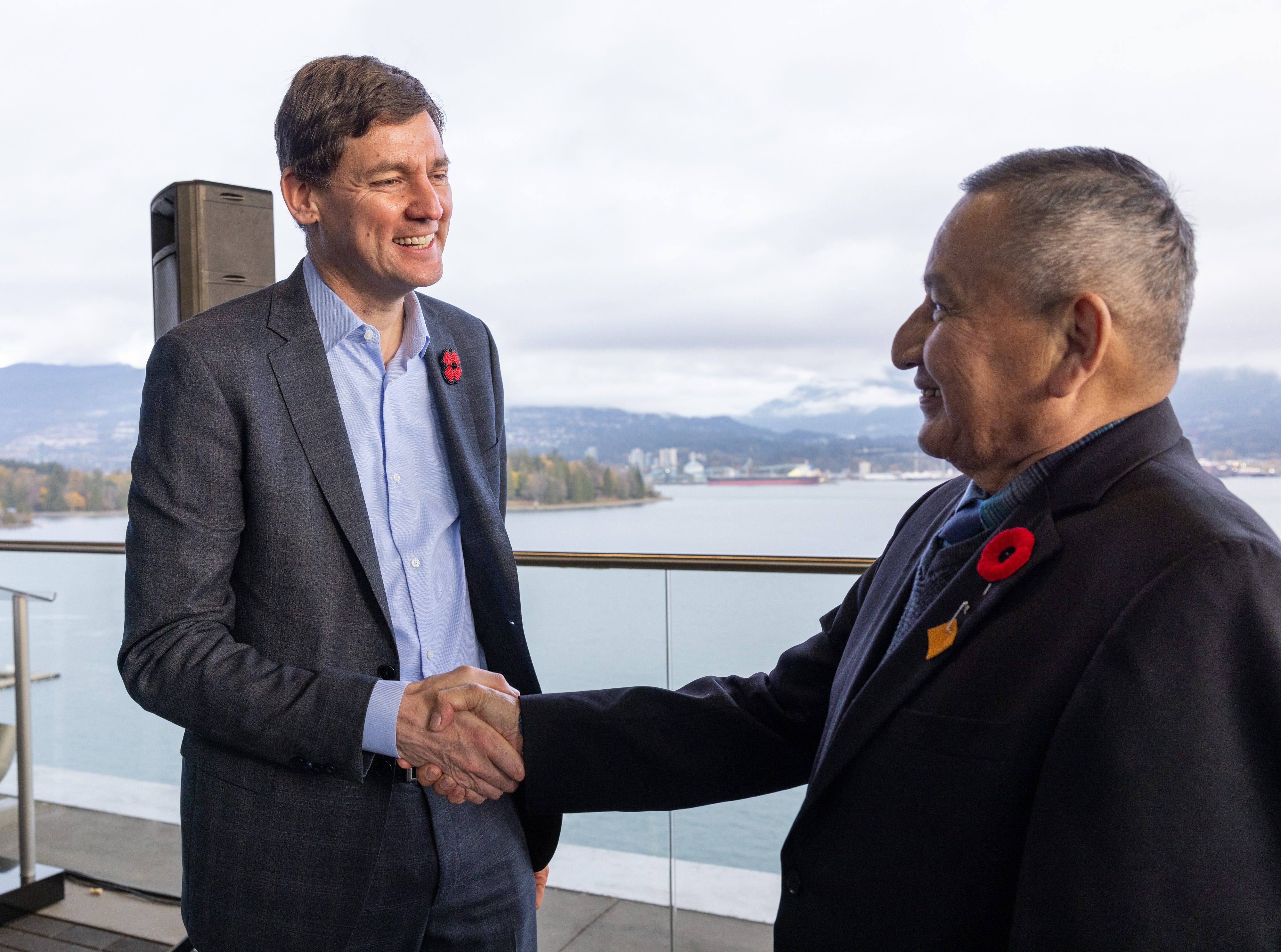
The B.C. First Nations Leadership Council (FNLC) is adamant that it will accept no changes whatsoever to the Declaration on the Rights of Indigenous Peoples Act (DRIPA) and insists that the government live with the result of the United Nations Declaration on the Rights of Indigenous Peoples (UNDRIP) effectively being positive law in British Columbia.
In a news release dated April 9th, 2026, the FNLC made it abundantly clear what would happen if the Premier proceeded with an attempt to amend or suspend portions of DRIPA without its consent:
“If the government proceeds without the free, prior and informed consent of First Nations, the FNLC and First Nations will pursue every available avenue, legal, political, and through direct action to defend First Nations’ rights…”
The following then appeared in a letter sent to all MLAs in the House by the FNLC:
“Any attempt…will be met with collective resistance from First Nations and allies across the province.”
These threats, which appear to indicate a willingness to engage in acts of civil disobedience, have paralysed the Eby government and have directly caused the Premier and his Attorney General to back down from making any changes to DRIPA in the legislature, favouring instead a six-month negotiation with the FNLC to attempt to solve what the Premier has described as an “urgent need” to deal with the potentially unlimited legal liability the province faces as a result of the B.C. Court of Appeal judgment in Gitxaala v. British Columbia (Chief Gold Commissioner), 2025 BCCA 430, which made UNDRIP legally enforceable in B.C.
Let us be clear: any such negotiations will have only one of two results:
(1) The FNLC convinces the government to leave DRIPA alone and live with whatever outcomes arise from the application of UNDRIP as the positive law of B.C., with all the legal liability that will entail; or (2) The government convinces the FNLC to agree to some form of amendment or alteration to DRIPA to remove the enormous, “urgent”, and “non-negotiable” legal liability the Premier has clearly admitted the Gitxaala decision creates for the province.
It is clear to those who see what the application of UNDRIP as positive law in B.C. will do to this province: that uncertainty, virtually unlimited litigation liability, and incredible levels of societal division will ensue.
I and other legal commentators have observed that a careful reading of what UNDRIP articles say leads to the inevitable conclusion that it is a UN-created recipe for the co-governance of this province by the FNLC.
Article 19 of UNDRIP says:
“States shall consult and cooperate in good faith with the Indigenous peoples concerned through their own representative institutions in order to obtain their free, prior and informed consent before adopting and implementing legislative or administrative measures that may affect them.”
Imagine a modern, democratically elected Western government being told that it cannot make or repeal any legislation that may affect rights set out in a UN declaration without the free, prior and informed consent of representatives of that jurisdiction’s Aboriginal people. This is beyond ludicrously undemocratic and is completely inconsistent with section 35 of Canada’s Constitution Act, 1982.
Then, further suppose that the level of control and intimidation that is being brought to bear on the current B.C. government by the FNLC literally prevents the government from being able to make amendments to legislation to deal with widespread legal risk to all British Columbians without getting the agreement (consent) of that political entity.
In its decision in Mikisew Cree, the Supreme Court noted:
“Applying the duty to consult during the law-making process would lead to significant judicial incursion into the workings of the legislature, even if such a duty were only enforced post-enactment. The duty to consult jurisprudence has developed a spectrum of consultation requirements that fit in the context of administrative decision-making. Directly transposing such executive requirements into the legislative context would be an inappropriate constraint on the legislatures’ ability to control their own processes.”
To be crystal clear, what the court was dealing with in that case was the proposition that Parliament has a duty to consult Aboriginal people under the Canadian Constitution even in the process of promulgating legislation that may affect them. The court was clear that imposing even that kind of mere consultation duty would be an “inappropriate constraint on the legislature’s ability to control their own processes” — that is, a direct and inappropriate constraint on parliamentary sovereignty.
Yet the B.C. NDP government has accorded co-decision-making authority over the promulgation of, and even the amendment of, legislation by the B.C. Legislature to an unelected Aboriginal leadership group that claims to represent about 2 per cent of B.C.’s population.
From a pure democratic and legal perspective, this cannot end well for British Columbians.
Geoffrey S. Moyse, KC, is a retired senior lawyer who served as legal counsel to the Province of B.C., advising six successive governments on Aboriginal law over more than 30 years. He is principal at Moyse Law and an advisor to the Public Land Use Society.

“This is beyond ludicrously undemocratic and is completely inconsistent with section 35 of Canada’s Constitution Act, 1982.”
Geoffrey Moyse is a Godsend. Very seldom are we able to consume such high level legal opinions for the cost of our subscription.
Like so much of what has changed for the worse in Canada, we have done this to ourselves. For forty-five years I have heard folks warn of a “conservative hidden agenda”, but, for reasons I can’t explain, it only appears from the efforts of the Organized Left.
Great work, Mr. Moyse, and thank you for your efforts.
It is my understanding that the FNCL is a group of six or so advocate which has zero organizational legal status or mandate, likely funded in part from foreign sources.