


I am preserving the conditions that made my existence possible.
Two weeks ago, my colleague Alexander Brown penned a stirring piece about his family’s role in founding the National Citizens Coalition. He spoke as a man who inherited a tradition, who grew up inside it, and who absorbed its assumptions with his breakfast cereal. It is the essay of a Canadian with roots so deep they touch the bedrock.
I admire that formation, more than he likely knows. In a country that today shies away from naming the roots of its founders, many Old Stock Canadians likely do not realise the extent of the respect that the children of immigrants have for those foundational cultures, not just the institutions that they built.
On the face of it, I have no such roots.
I have bare rock.
In the immediate wake of the Soviet Union’s collapse, my parents came with what they could carry. It is a cliché of the immigrant experience precisely because it is true: my parents could not yet articulate it in English, but they had hope that this strange, impossibly different country would give them a chance.
My father was a polyglot who spoke seven languages and could learn another in a fortnight. He was a musician, a pizza delivery driver, a contraband cigarette reseller, a coin and stamp aficionado, and a security guard.
My mother had gumption, such that as a girl in the Soviet Union she refused to participate in the Young Pioneers. She did this at an age when that refusal meant exile from every social institution that mattered, because she saw what the system was and wanted no part of the rot.
A pamphlet about multiculturalism is not what sold them on Canada. They came, in part, because the Soviet Union and what followed was a civilisational lie. They knew it in their bones. They came because Canada was a civilisational truth, imperfect, quiet, not yet fully aware of its own magnificence. They could smell it from across an ocean because the story of Canada carried. For all of our self-inflicted wounds, Canada’s allure still carries like a dream on the wind for the millions of immigrants who have been busy coming here for decades, and for all those who would still like to.
They also came in part, like many the world over who dream of a spot in this country, because of the promise of the abundant Canadian welfare state. It would be dishonest of me to shy away from naming it.
I share this all with you because the question of who is conserving and what they are conserving matters. It matters quite a lot, actually.
The British and the French built something extraordinary on this soil. I mean this as no platitude. It is a truth we have lost the courage to state.
That embarrassment about our roots is itself a symptom of the very disease we are trying to cure.
The British brought the common law and a rich parliamentary democracy. They brought the presumption of innocence.
Their descendants, by blood and belief both, carry a tradition of civic voluntarism that remains the envy of every nation that lacks it, and a cultural sensibility that prizes understatement and restraint. The Scots in particular brought a characteristic common sense.
They brought an expectation that institutions will function because honourable people staff them, all of it a product of centuries of institutional selection.
The French brought a distinct civilisation. They brought a beautiful language and a legal tradition. They brought a parish structure that still stands.
They brought a literary and philosophical culture of startling depth and beauty, and the stubborn insistence that North America need not be monolingual or monocultural to be coherent.
Together, they negotiated with Indigenous peoples, sometimes, many times, imperfectly. I will not pretend otherwise, and I do not think honest conservatism requires us to.
They negotiated amongst themselves too, creating a constitutional arrangement so improbable and delicately balanced that most countries with half of Canada’s linguistic and regional complexity have long since collapsed into authoritarianism or civil war. We have not.
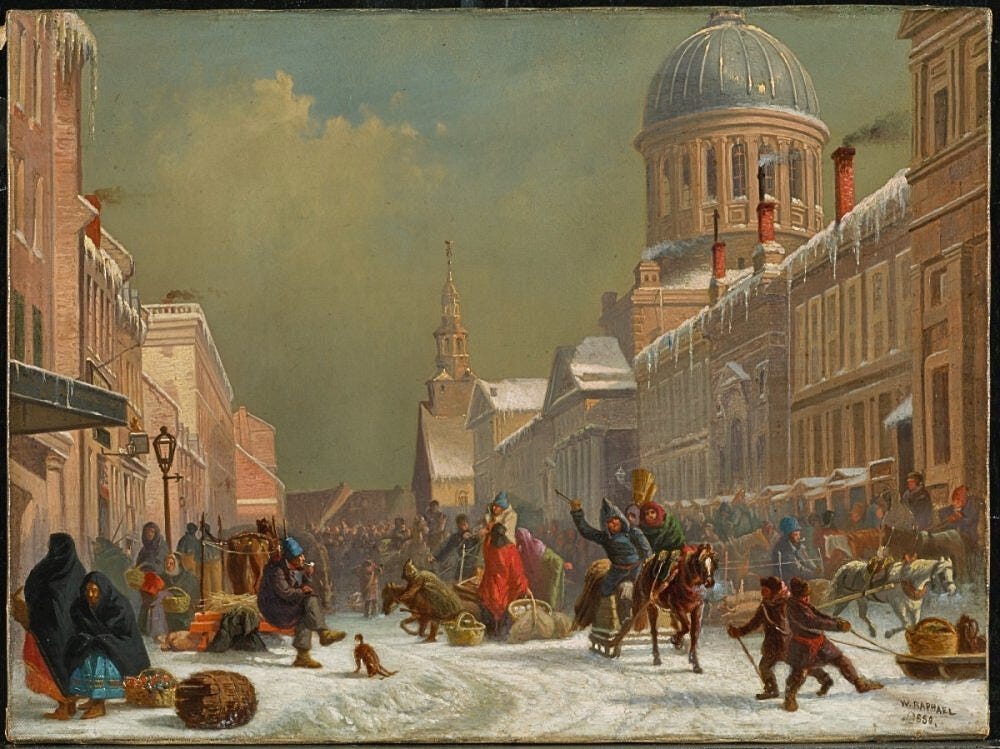
They were the pioneer species. The British and the French broke the stone and made the soil long before my parents ever crossed the ocean.
As it happens, the rock on which they settled was never bare.
It is not through luck that Canada has endured, but through craft. Centuries of institutional craft took place, recognising that a country this large and this diverse requires both a tolerance for difference and the architecture to survive.
I grew up both within and outside it all. We were below the poverty line and on social assistance for most of my formative years.
My mother hustled for every advantage, much like the way she had once hustled for French perfumes to trade for social capital in a collapsing USSR.
My father could explain Dostoyevsky in the original, the tensions in Hindu philosophy, and the geopolitics of the war in Iraq, but he could not navigate the Canadian labour market nor hold onto sobriety long enough to stay employed.
The architecture of Anglo-Franco Canada was not built for those like us, not initially.
It let us in. And the deal, the implicit deal, was trust and common purpose. Not suspicion.
It let us in and it did not ask us to pretend we were something we were not. It asked only that we contribute. That we learn the rules. That we understand the inheritance we were being handed and treat it with the seriousness it deserved.