


Imagine if people forgot how to operate all computers and smartphones. How far back in the evolution of technology would we have to go in order to maintain as much continuity in daily life as possible? Would it mean returning to typewriters and a new golden age of the post office? Would we all have to re-learn cursive and start keeping address books again?
The sort of collapse implied by that may seem remote, but it has happened several times in the past. The end of the Bronze Age, the fall of the Western Roman Empire, or the repeated collapses of civilization in Mesopotamia are only a few examples. More recently, the fall of the Qing Dynasty, the end of the Romanovs, and the extinction of the Austrian, German, and Turkish empires, which all happened within the space of a single decade, should remind us that sometimes there is no going back and no continuity in human affairs. This happens because the old ways are forgotten or so completely discredited that they no longer inspire confidence, even when someone tries to revive them.
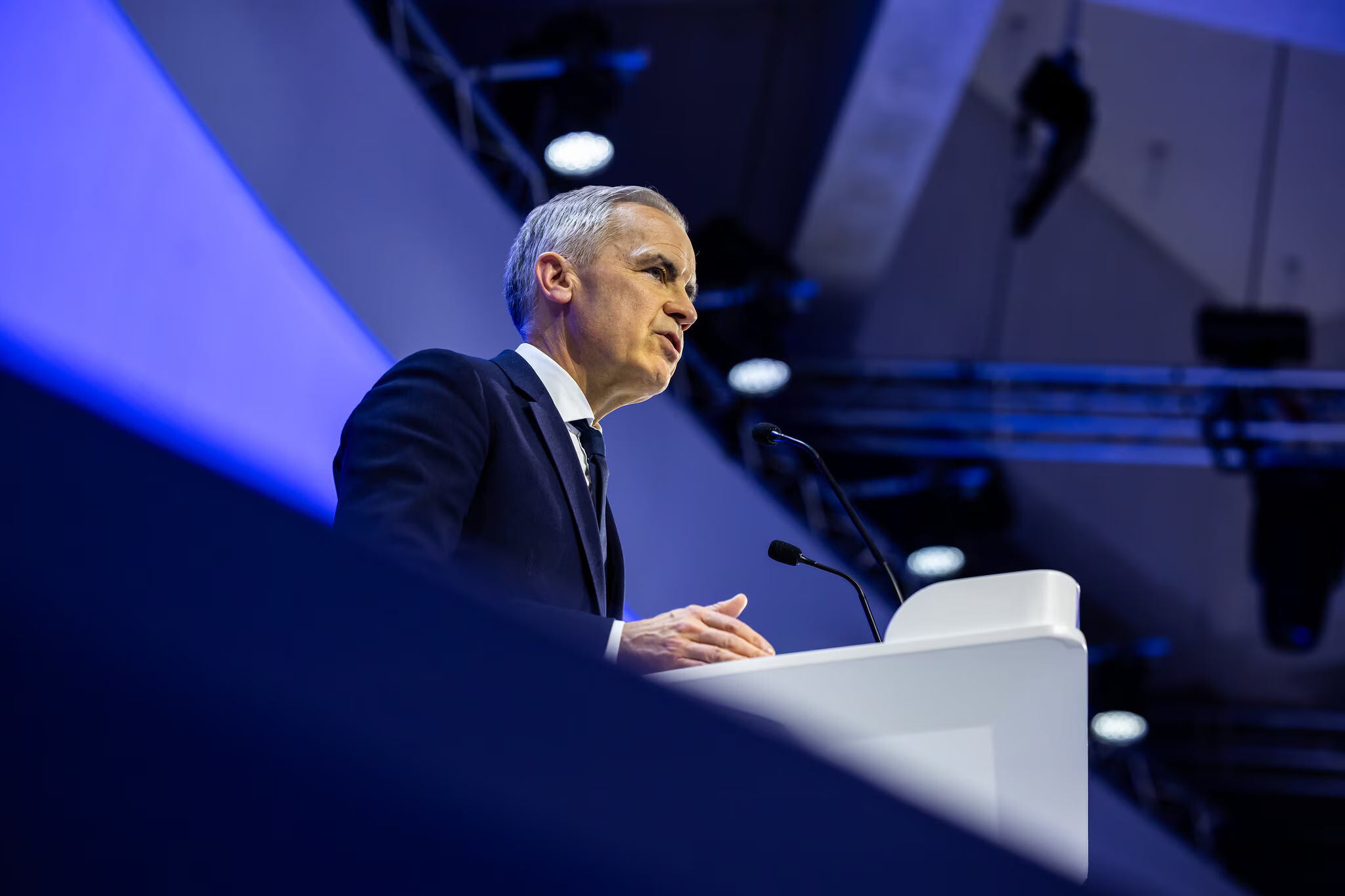
Such reflections came to my mind while listening to Mark Carney’s speech at the World Economic Forum at Davos. For the past 80 years, we have heard constantly of the evils of nationalism, patriotism, and sovereignty. Every evil of the first half of the 20th century has been blamed on them. The formation of the much hoped-for Open Society would be assured by casting aside all the old obedience to state and nation in favour of internationalism. Love of country and local sovereignty were denounced as ignorant parochialism. The globalization of the late 20th century seemed to justify this attitude, and it seems only yesterday that we were told that Canada’s great virtue was its lack of a core identity and its condition as a ‘post-national state’.
Carney struck a different note. Globalization and the liberal international order, he began, are ‘in the midst of a rupture, not a transition’. That’s not exactly a novel idea, of course. What was new and shocking was Carney’s insistence that that order had always been a fiction, a ‘useful’ one, but a fiction nonetheless. It was, he said, ‘partially false’ insofar as ‘the strongest would exempt themselves when convenient’, ‘trade rules were enforced asymmetrically’, and ‘international law applied with varied rigour, depending on the identity of the accused or the victim’.
The novelty and shock consist not simply in hearing it from Mark Carney, the living embodiment of Davos Man. It’s rather that his speech recalls the sentiments of international liberalism’s most vocal critics over the past two decades. Carney went further even than the likes of Hungarian and Russian leaders Viktor Orbán and Vladimir Putin. When they announced the end of liberalism in the 2010s, they merely claimed that liberalism was obsolete, that it had run its course, not that it had always been a sham.
And what was Carney’s suggested solution? Rebuilding our sovereignty. Carney contrasts the condition of a truly sovereign nation with the abject condition of a small country negotiating with an international hegemon. A crescendo of ChatGPT-ese reached its climax in the phrase: ‘This is not sovereignty. It’s the performance of sovereignty while accepting subordination’.
A good deal of the old multilateralist boilerplate followed. Commitments to NATO and the UN Charter were reiterated, various strategic defence and trade partnerships were mentioned. And at the centre of it all were our ‘values’, our ‘fundamental values’, and ‘the strength of our values, but also the value of our strength’. Hackneyed phrases. But they pleased the Davos crowd.
Liberals and internationalists once struggled to pronounce words like ‘sovereignty’ without wincing, but that word may as well have been Carney’s chorus or refrain. It seemed more readily to recall the effusions of Geert Wilders and Marine Le Pen than those of Justin Trudeau and other ostensible liberals.
If Carney wishes to revive a stronger, sovereign Canada among other like-minded, sovereign states, then we should wish him well. But will he match words with deeds? Is such a revival even possible? I would like to think so, though I am not optimistic. Cozying up to China and Qatar does not seem to bode well. And so far, I detect little effort on the government’s part to improve any of our domestic troubles, from rampant crime and social decomposition to a dysfunctional immigration system and mounting inflation.
But my worst fear is not the disappearance of an old world order and new uncertainty. It is rather that the sudden rediscovery of sovereignty, patriotism, and national confidence is a sham, not because there isn’t a real need for these things, but because they have been ridiculed, denigrated, and ignored for so long that their real meanings have been forgotten. They are, I fear, like the word ‘values’, devoid of content now. If this is true, the national revival, for which Carney was ostensibly elected, will come to nothing.
Dr Michael Bonner is the author of ‘In Defence of Civilization’, and the upcoming ‘The Crisis of Liberalism’. He is a former Director of Policy within the Government of Ontario.

It will come to Canada’s further fall from relevance and prosperity. Carney is full of his own ideas which will not help Canadians.
Of course, the international trade regime is ruptured; of course we are on the cusp of a new world order. We know these things to be true, as how else would Davos Man explain his failure to successfully negotiate with the evil American Hegemon?
A few short years from now, we will ridicule the folks making these preposterous comments about sovereignty, patriotism, nationalism, unification, and, especially, national sacrifice.
We will mock the folks who traded their prosperity for some malleable notion of national pride, while the usual suspects continue to reward themselves with international postings, diplomatic sojourns, and plumb appointments that do nothing to improve the lot of Canadians.
Davos Man will have moved on, more speeches to give and more fools to charm, his pile of loot having not diminished in the least.
What will remain? An unruptured, old world order, the USA will still be our largest trading partner, and debt, crime, taxation, productivity, affordability, foreign interference, immigration, accountability, apathy, constitutional reform, succession threats....... they will all remain.