
Kieran Wilson: The Conservatives should back high-speed rail
Train-timid Toryism falls short in matching Macdonald's legacy of nation-building projects.


Is there a consensus among our two main political parties on revitalising our long-neglected national infrastructure, or is there not?
The collectively defiant response from Canada’s political class to Donald Trump’s aspirations to make our country the 51st state was a welcome reprieve after a decade of shamefaced Trudeauian waffle. Now, at last, there seemed to be agreement that our Canadian institutions, our way of life, our military, our history, and more were worth celebrating. It seemed that Canada was waking from its post-national stupor, as if from a bad dream.
During the last election, it was especially encouraging to see both the Liberals and Conservatives promise to invest in infrastructure and resource projects of generational importance. It was therefore disappointing to hear Conservative leader Pierre Poilievre come out against the Alto project, a proposed high-speed rail network that would link Canada’s most populous region from Toronto to Quebec City.
Setting aside the question of this specific project’s merits, for the Conservative Party to be seen as the party of “no” at a moment when the Canadian people are hungry for growth and development will be electorally disastrous in the short term. However, the fortunes of a political party are less important than the welfare of my country. That one of Canada’s two governing parties should embrace a short-sighted, and frankly defeatist, approach to infrastructure development is bad for the country. It augurs ill for growth and investment in nation-building projects under a future Conservative government.
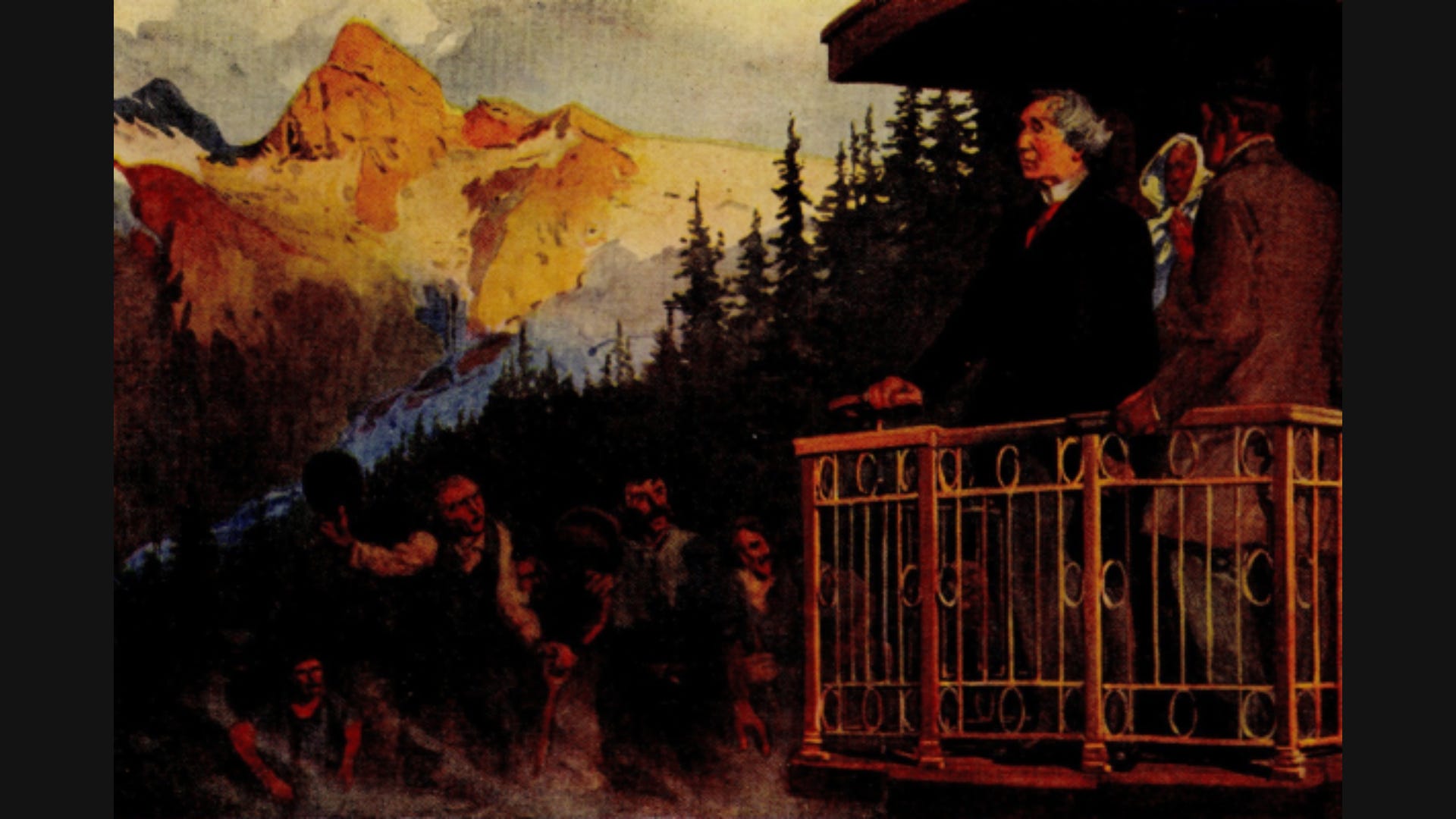
Mr. Poilievre’s opposition to the Alto proposal is all the more baffling when seen in the light of the Conservative Party’s historic championing of nation-building infrastructure projects. Sir John A. Macdonald’s vision of a Canada that stretched from the Grand Banks to Nootka Sound, and was knit together by a great continent-spanning railway, is the stuff of legend. As our first prime minister recognised the young Dominion could not be viable without access to the Pacific coast, and a political union with the colony of British Columbia would be meaningless without a transportation link to give it practical effect. And so the “national dream” of the Canadian Pacific Railway was born.
Yet there were strong arguments against a transcontinental railway. When it was first proposed, it was by no means clear that the engineering expertise and construction technology of the mid-19th century would be up to the task of “cracking the mountain ramparts” that separated the B.C. coast from the rest of Canada. If the line was to be built, it would only be built by creative thinking and innovative techniques. The builders of the Canadian Pacific Railway proved equal to the challenge: by clarity of vision and strength of will, they overcame the practical obstacles to the railway’s construction and accomplished feats of engineering prowess that still dazzle the eye and awe the mind a century and a half later.
Besides practical considerations, there was also the perennial question of financing. How would a young country with a small tax base meet the cost of this colossal undertaking? The imperial government in London, increasingly wary of incurring financial obligations in its former Canadian colonies, was unlikely to be of much help. In those days, it was the role of the Liberal Party under Alexander Mackenzie to raise the spectres of cost overruns and mounting national debt, and to invoke the principles of sobriety and financial restraint as reasons why the railway should not be built, at least not on the scale proposed by the Tories. In Mackenzie’s view, Canada could not afford to build a transcontinental railway. Macdonald, more clear-sighted than his fellow Scot, knew that Canada could not afford not to build it. Financial propriety came second to national preservation.
It is unfortunate that today’s Conservative Party has chosen to take up the cause of Mackenzie’s Liberals rather than embrace the bold vision of its founder. Much as there might be to criticise in the Alto proposal, much there was to criticise in the construction of the Canadian Pacific Railway. Yet then as now, the response to deficiencies, real or perceived, must not be the abandonment of the project, but its improvement. Canada deserves an ambitious opposition, one that pledges to outdo the government in infrastructure investment, and that commits to revitalising Canada’s rail system, from restoring efficient commuter service to Vancouver Island’s rail corridor, to establishing a high-speed rail link between Calgary and Edmonton. Canada’s future belongs not to the penny-pinching and the cautious, but to the visionary and the daring.
Sir John A. Macdonald set out to build a nation and a railway. He did both despite the naysayers, and for his achievement he is rightly honoured with the foremost place in the pantheon of Canada’s founders. If today’s Conservative Party is to be worthy of its heritage as the party of Confederation and the party of the Canadian Pacific Railway, then it must return to its mountain-cleaving, track-laying roots and advance a bold plan for Canadian infrastructure development. Now is not the time for train-timid Toryism.
Kieran Wilson is a public servant, editor, and author based on Gabriola Island, B.C. He is currently undertaking graduate work on the early colonial history of British Columbia and Vancouver Island.

This is a garbage read. Train timid? How in the world does this HSR nonsense compare to a continental rail effort? How will this improve the life of this writer in B.C. Lotus Land? Do better.
HSR to Quebec would be a perfect Liberal boondoggle. Polievre is right.