
Iain Black: Strangers in our own province
The cost of British Columbia's cultural and fiscal drift.


For a long time, the “British Columbia Dream” was a simple, sturdy promise: if you worked hard, you could build a life here. But for a generation of British Columbians in their mid-to-late thirties and younger, that promise hasn’t just been broken; it has been liquidated.
As I travel across this province, I see a meaningful and dangerous chasm opening between the people who keep this province running and the government that claims to lead them. It is a disconnect rooted in a fiscal collapse that has left us bankrupt, and a cultural drift that has left our citizens feeling like strangers in their own home.
I am running for the leadership of the B.C. Conservative Party because I refuse to accept this “new normal”.
We are told by the current administration that a record-setting $13.3 billion deficit is simply the cost of doing business, yet the business of the province is failing on every front. With taxpayer-supported debt projected to triple to $166.5 billion by 2027, we are effectively mortgaging the future of our children to pay for the administrative bloat and government salaries of the present. This is not just a spreadsheet error; it is a moral failure.
As a father, CEO, and a former cabinet minister who has managed complex budgets, I know that you cannot spend your way to prosperity when the foundation is rotting.
The demographic in their thirties, the very people who are normally the emerging engine of our economy, is being hit the hardest. They are the young families who cannot find a family doctor, as they watch the government’s $15.5 billion capital health plan produce more bureaucracy than beds.
They are often hard-working professionals who, after twenty years of effort, realise they cannot buy a detached home as their parents did. They are lucky if they can even scrape together a down payment for a townhouse. They see a path to the next stage of adulthood that is blocked by regulatory chokepoints and a government that views the private sector, their employers, as an enemy rather than a partner.
In addition, they are the first generation being asked to accept the surrendering of public spaces in their communities, our parks and city squares, to criminals and those with untreated mental health and drug addictions; the latter under the guise of “decriminalisation” — a policy that has failed so spectacularly that even its staunchest defenders are beginning to look for the exit.
My platform is clear: our parks are for families, not for open-air drug use. I have committed to redeveloping the 244 acres of the Riverview Lands into a centre of excellence for mental health and addictions recovery. Supplementing this investment will be the construction of dorm-style housing units in both Greater Vancouver and across the rest of B.C. to ensure that nobody is allowed to sleep on our streets.
We will prioritise addictions treatment over permissive drug supply, and work closely with local police to restore order to “Main Streets” across the province.
Perhaps most worrying of all is the increasing disconnect young parents are feeling with our public school system. Parents feel a deep-seated frustration when they see a curriculum that drifts away from measured academic outcomes while teaching their children we are merely “settlers” and “colonisers” on occupied land.
When the Grade 9 and 10 Social Studies programmes focus more on deconstructing our “colonial entanglements” than on celebrating the fact that we live in the greatest country in the world, we shouldn’t be surprised that our youth feel disconnected from their national identity. I will push back against such activist interference, and broaden parental input into the public institution in which we entrust our children for 13 years of their lives.
One of my competitors in this race recently wrote about taking the “hard road” of principled conservatism. I respect that sentiment. But the road ahead is not just hard, it is urgent. We do not have the luxury of a “long-game” solution. We need to be ready to govern on Day One with a disciplined team and a “B.C. First” strategy that stands up to Ottawa and demands our fair share. Simply, we don’t have the luxury of the time needed to train a premier.
My 100-Day Plan includes immediate action: repealing the Declaration on the Rights of Indigenous Peoples Act (DRIPA) to restore investment certainty in British Columbia and, if necessary, engaging Ottawa and other premiers to enshrine private property rights into Section 35 of our Constitution.
We will replace the NDP’s failed tunnel project with the 10-lane Sir John A. Macdonald Gateway.
We will eliminate the natural gas cap, allow for immediate liquefaction projects, and use AI-led permitting and the appropriate professional services firms to break the many bureaucratic chokepoints that are stalling our economy. And we will roll back the overall government regulatory burden to 10 percent below 2017 levels.
We must return to the “Main Street” values that built British Columbia: fiscal sanity, public order, and the belief that you can get ahead through hard work. The chasm is wide, but it is not unbridgeable. By shrinking the size of government and unleashing the power of the private sector, we can get this province back on its feet and ensure that the next generation isn’t just surviving in B.C., but is once again proud to call it home.
I’ve spent my career at the intersection of business and public policy, and I am the guy they call when a system is highly dysfunctional and hemorrhaging money. British Columbia is currently at that crossroads. It is time to stop the bleeding, close the disconnect, and get B.C. back on track.
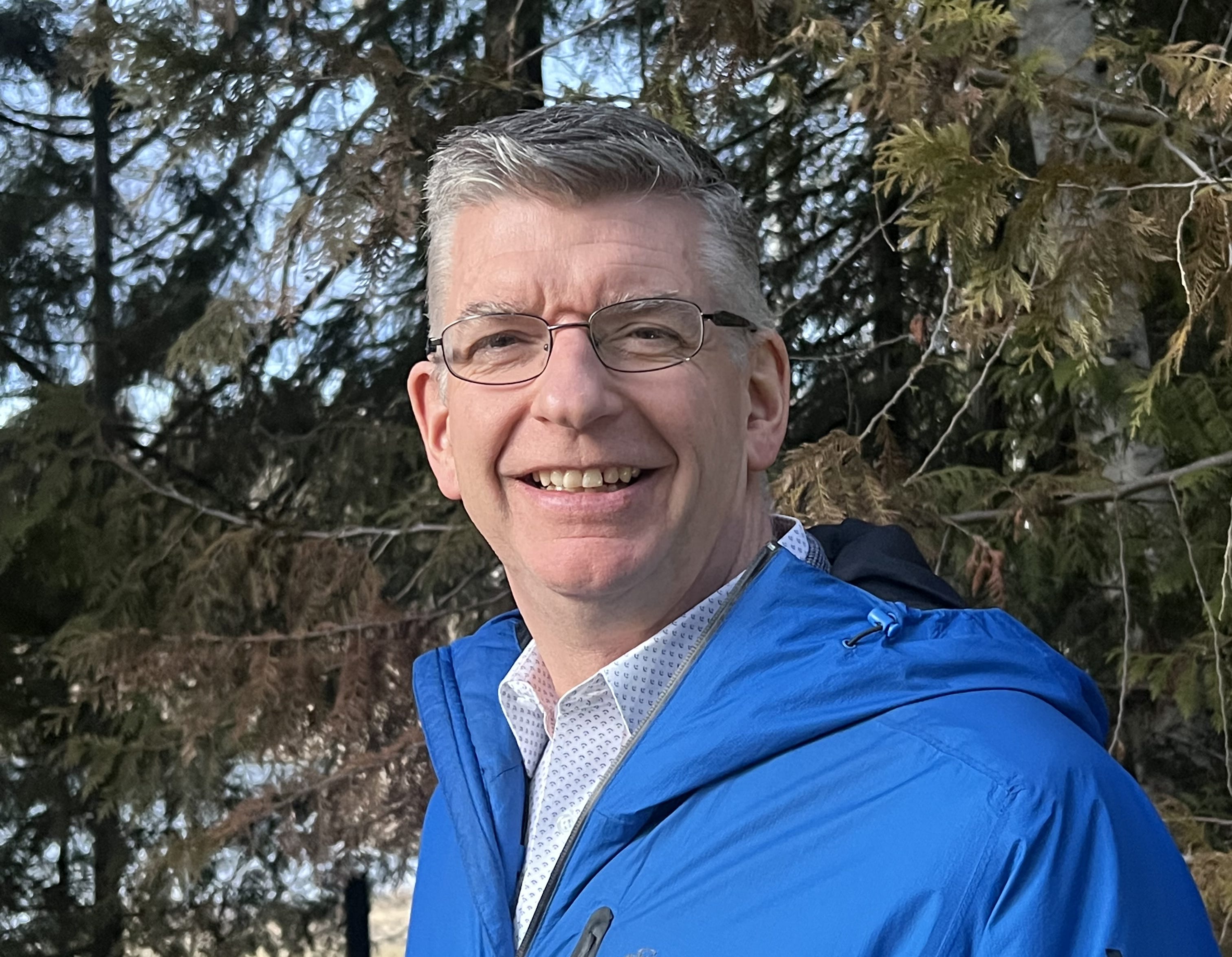
Iain Black is a candidate for the leadership of the BC Conservative Party. He previously served as a cabinet minister in the BC government and as the President and CEO of the Greater Vancouver Board of Trade.
For more information on his campaign, visit: www.iainblack.ca.

This is an excellent essay, and a call-to-arms for all Canadians.
Mr. Black has written eloquently about the need for action, and he makes a great point. But I think he underweights the importance of laying a principled conservative intellectual alternative, in order to build the ground game necessary for future victories.
If we are serious about reclaiming the Canada we once had, we need to stop being simply the default voting position when folks become angry at the FarLeft, and become a fierce, concise, & competent intellectual movement.
We have the best story to tell; we need to learn to tell it better.
Pretty inspiring.
I don’t have an iron in this fire as I live in NW Alberta but in my opinion a successful British Columbia needs all regions working together. For too many years it seems northeastern BC has been taken for granted or outright ignored by those in Victoria and the lower mainland. It’s very strange as that region contributes so much economically with a limited population of very hardworking people. As an Albertan it has been especially frustrating to see the decline in BC’s fortunes when that province has an almost limitless potential. If ever there was a province in desperate need of a change in government it is British Columbia. Good luck in your leadership race.