
Sam Dagres: Why do we send our kids to jail?
Market worship means that women must work, and if kids get in the way of that, they must be sent to the slammer — or as we call it, daycare.


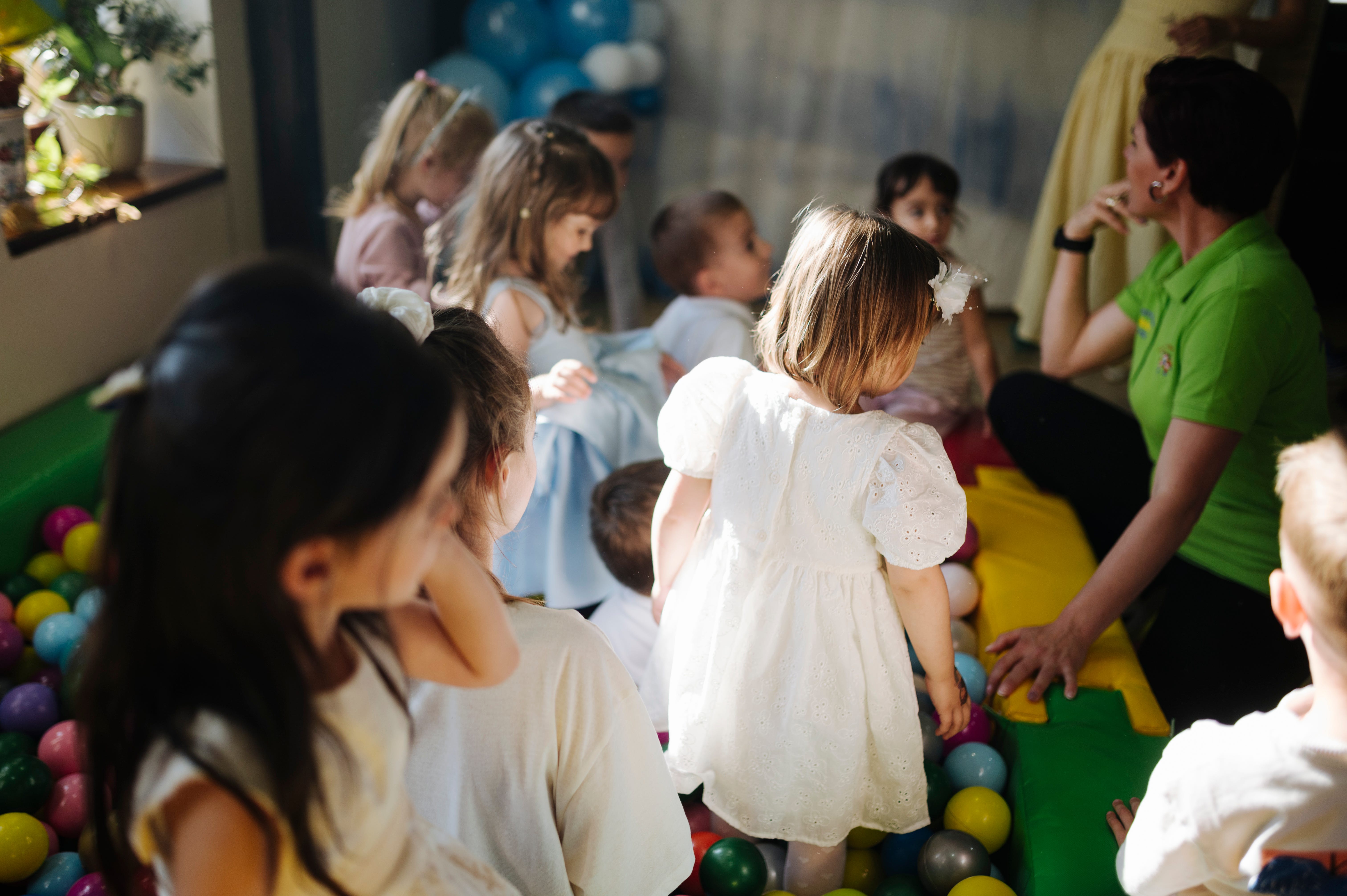
You’re sitting there, one eye on the clock, eagerly waiting for the bell to ring. How you crave the chime of that sweet-sounding bell, a ring marking the start of your allotted outdoor time. You rush outside, feel the sun on your skin, eat a snack reminding you of a world that exists on the other side of the fence. But for most of the day, you are sat, effectively immobile for 8 hours. Stillness is the highest virtue, and any violation leads to punishment and an ADHD diagnosis. Day in and day out, you wait for the last bell.
Most of us will have experienced this kind of imprisonment, befitting what crime, you may wonder? We are punished for the crime of being born into a society where all forms of care are by default institutional, a society whose ‘child care policy is adult policy, not early childhood policy’, as Katharine B. Stevens noted.
According to Statistics Canada, approximately 5.5 million students are enrolled in K–12 public schools, dwarfing the 67,000 who are home-schooled. Nearly 99 per cent of all school-aged children in Canada are currently institutionalised.
In 2025, 58 per cent of children aged 0 to 5 were in childcare facilities, representing approximately 1.4 million children. One-quarter of those were aged under 1.
As someone who attended public schools all my life, I never thought of it as anything but natural. But as I reach a point in my life where family formation is uppermost in my mind, I wonder whose interests are prioritised whenever I walk by a school and hear, not see, kids playing on the other side of a tall brick wall.
We do not leave it to children to decide very much for themselves, which means their interests are ours to safeguard. Luckily, the research exists: institutional, non-familial care is not what is best for most of our young.
The incomparable Institute for Family Studies recently enumerated the relevant studies, one of which is the NICHD Study of Early Child Care and Youth Development, which followed 1,000 children from infancy through adulthood and found that ‘children who had spent at least 30 hours per week in those settings beginning in infancy had three times the rate of social-emotional difficulties, including lower social competence, higher externalising behavior, and more conflict with teachers and peers. These effects persisted through elementary school, and by adolescence appeared as impulsivity, risk-taking, and substance use’.
Similarly, studies of Quebec’s universal childcare system have shown that the programme ‘has been associated with increased anxiety, aggression, hyperactivity, worse parent-child relationships, and lower self-reported life satisfaction in adolescence. By young adulthood, the negative effects extended to a 22% increase in criminal conviction rates’.
The foundations of our emotional and cognitive lives are formed early on while we bond with caregivers, and early institutionalisation disrupts that. The emotional downsides resulting from the systematic separation between the young children and their mothers are not broadly grasped, since the opposite is widely believed. When I share my musings about home-schooling with my friends, without fail, I receive the unanimous response: ‘Aren’t you worried they’ll turn out weird?’ To that I respond, ‘Have you been paying attention?’
We are living through an era of weird, surrounded by friendless, non-eye-contact-making, socially anxious individuals. Nowadays, most schools encourage gender exploration and, through intense anti-bullying campaigns, demand a near-total embrace of any and all quirks. Not to mention that these tiny balls of anxiety, for some reason, require Vietnam-War-vet-levels of pharmacological intervention. I had someone tell me, ‘In my current role, I feel more like a pharmacist than a teacher’.
We can attribute the explosion of weirdness to a whole host of factors, notably digital devices and their role in mass social atrophy, but the forced dislocation of young children from their families is the foundation for a lifetime of alienation.

When we consider the impact of school on older children, the kind of socialisation permitted in school matters, and it increasingly takes place under the watchful eye of (overwhelmingly) progressive women. This means that the type of play is mediated by what this specific demographic thinks is tolerable. For example, in 2010, my elementary school’s annual Olympic Day was turfed when the staff banned us from keeping score. Olympic Day stirred up too much competitive spirit, they said; can you believe that? Even at 10, most of us accepted there was no point in participating and spent most of the day picking grass.
Psychologist Jonathan Haidt, who has written extensively on both the pervasiveness of overbearing parenting and the scourge of digital media among children, believes it is free play that makes the difference:
‘It is in unsupervised child-led play where children best learn to tolerate bruises, handle their emotions, read other children’s emotions, take turns, resolve conflicts and play fair.’
Even if teachers wanted to allow free play at recess, issues ranging from legal liability to parental intervention would make it extremely risky. Our cultural tolerance for affording children even a modicum of freedom is nil, and thus schools must protect against everything from scraped knees to hurt feelings.
The quality of classroom education seems to be in decline. The Organisation for Economic Co-operation and Development (OECD), through its Programme for International Student Assessment (PISA), found that, in 2022, 18.1 per cent of 15-year-olds in Canada had ‘low literacy’ skills, a meaningful jump from 13.8 per cent in 2018. Similarly, 21.6 per cent had ‘low numeracy’ skills, up from 16.3 per cent. With ever-growing class sizes, teachers with 30+ kids must always teach to the lowest common denominator. This is not a surprising outcome.
This brings us back to Ms Stevens’s findings for the Institute for Family Studies: ‘Early childhood policy must be driven by what young children need from us, not the other way around’.
Kate Marland: Are modern women waking up to the perils of Progress Propaganda?

Destructionist efforts have sought to deny reality and liberate women from their biology. Restoring the social fabric requires elevating motherhood back to its rightful, honoured place.
Mandatory schooling in Canada was first instituted in Ontario in the late 19th century and quickly spread across the country. Liberal activists advocated school-attendance laws in tandem with child-labour restrictions, as placing children in school saved them from the dangerous and gruelling life of factory work. It was believed an educated child would be a more responsible, productive, disciplined, and learned citizen. My, how things have changed.
During a period when free-market ideas were ascendant, school-attendance laws might appear to be a rebuttal; however, the most fervent push for institutionalisation came from the female economic empowerment movement after the Second World War.
Charlotte Perkins Gilman, who wrote about this issue in the 19th century, argued that for men and women to be on an equal footing, family life, i.e. childcare and education, would require professionalisation.
In 1976, 40.5 per cent of mothers in Canada were employed; by 2023, the figure had increased to 79.8 per cent.
Despite masquerading as childcare policy, this form of market-driven feminism prevails to this day; it equates personhood with the ability to contribute to GDP. Kids do not come out of the womb contributing (lazy), and if babies had their way, they would stop their mothers from contributing for much longer than maternity leave allows.
This view of feminism also requires that we view men and women as interchangeable. Mission accomplished: I had a Cambridge PhD candidate tell me that there is no biological difference between male and female brains, perhaps too literal an interpretation of Simone de Beauvoir’s ‘one is not born, but becomes a woman’, but not far off!
As Mary Harrington writes in her book Feminism Against Progress:
‘If your concept of personhood is based on market participation, mothers don’t really show up as people. Mothers are only visible within this market society to the extent that we detach ourselves from caregiving, which is seen largely as an obstacle to that participation. And therefore, to self-realization’.
In a liberal society, a woman is not equal to a man unless she can become unmoored from motherhood and, ergo, from her biological realities. The mainstreaming of contraception, abortion, and state-funded childcare is an attempt to artificially equalise men’s and women’s relationships to sex and procreation.
Viewing economic autonomy as the precursor to full personhood is so ubiquitous in modern feminism that UN Women’s ‘women’s economic empowerment’ page states:
‘When more women work, economies grow. Women’s economic empowerment increases economic diversification and income equality for shared prosperity’.
Therein lies the tension for conservatives: market worship means women must work, and if those women decide to have kids, the children must be locked up.
There is no shortage of conservative moaning about the indoctrinating effects of schools and the lack of robust family values being disseminated, or of continuous fretting about cultural formation. But instead of imbuing our children with those values ourselves, we reflexively hand them over as soon as we can.
Criticism of the Liberal government’s $10-a-day childcare plan is near-constant, but every single major Canadian Conservative politician has supported some form of government-subsidised childcare. And the wheels of the industrial machine go round and round.
We should be having a meaningful conversation about school choice in Canada if we’re serious about the health and strength of our families and, most importantly, our children. This could mean both introducing a voucher system so that at-home carers aren’t losing out on taxpayer-funded benefits and reinstating income splitting for spouses.
Delegating the responsibility of edifying our children shouldn’t be automatic. State facilities, by and large, offer depersonalised, bureaucratic and largely progressive environments for children to grow up in — a system designed to prioritise the needs of adults over children. The unfortunate truth is that all sides participate in the race to get women out of the delivery room and into the office as quickly as possible.
Sam Dagres is a writer based in London, U.K. She was formerly the Manager of Communications at the Montreal Economic Institute. Her writing has appeared in the Financial Post, The Globe and Mail, Le Journal de Montréal, and the Toronto Sun.

For more from Without Diminishment and its contributors, follow along on X, YouTube, and Instagram.
Without Diminishment is a project of the Without Diminishment Foundation, a registered non-profit in British Columbia. If you value the unique perspective we bring to Canada’s cultural landscape, consider supporting our work with a generous donation.