
Geoff Russ: Ontario did not send its best
What has David Eby done for British Columbia since he arrived 21 years ago?


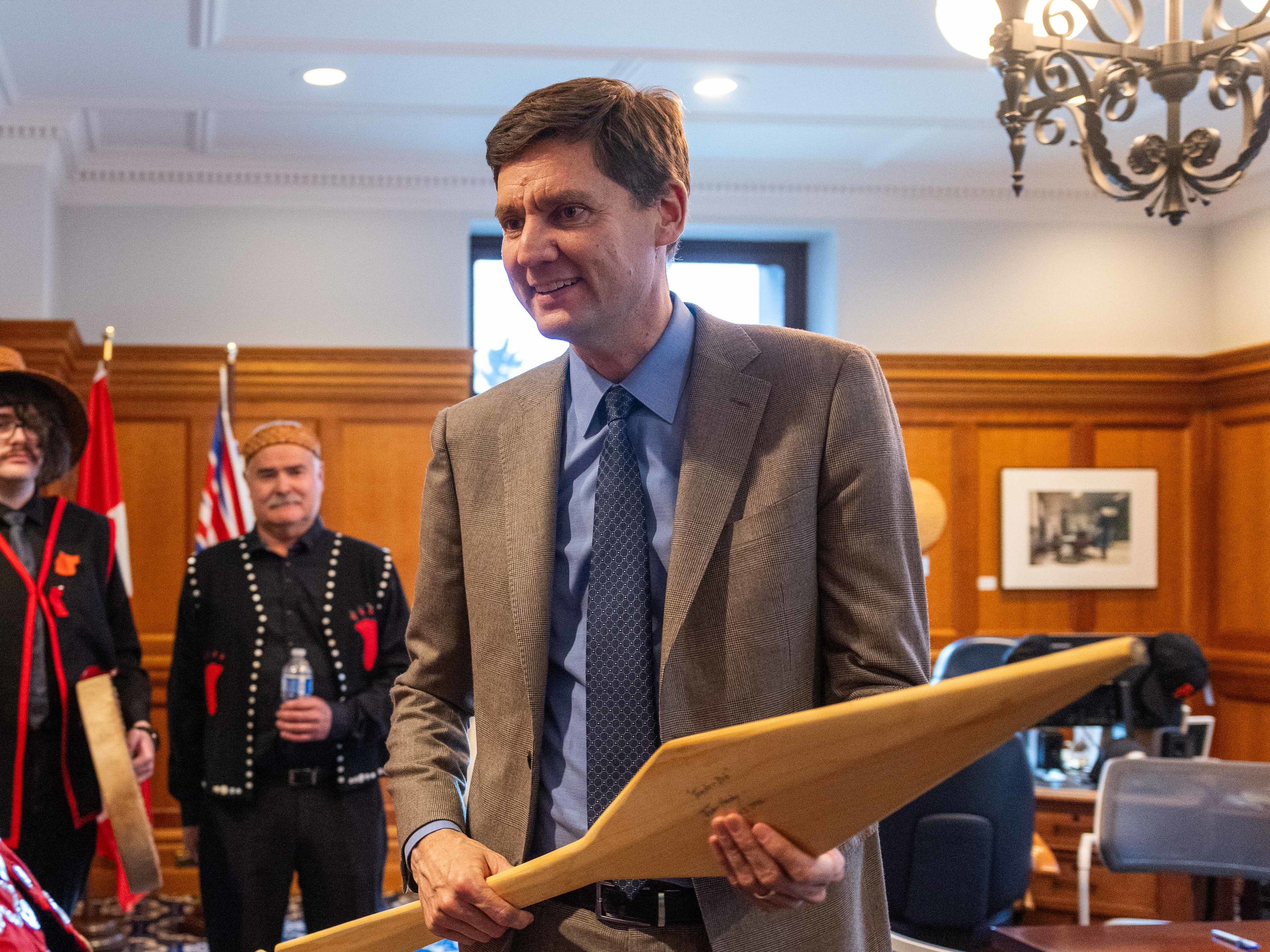
Everything you ever needed to know about David Eby was embodied in his latest retreat on DRIPA.
The premier had spent weeks insisting that the Declaration on the Rights of Indigenous Peoples Act (DRIPA) had to be amended or suspended, and that the changes were “non-negotiable”. When faced with a possible confidence vote in which the radical members of his caucus threatened revolt, the premier buckled and pulled any amendments or suspensions of DRIPA. Then he doubled down, making vague promises of co-governance with First Nations in the fall as an alternative.
DRIPA has become a debacle, and an assault on democracy in British Columbia.
If Eby goes through with his pledges of co-governance with First Nations, it will partially disenfranchise the 98 percent of people in B.C. who are non-Indigenous, for they cannot elect First Nations governments or hold them accountable. For Eby to accept this as the price for saving his own skin as premier is a confession of who he is as a politician and a man. He is ideological, improvisational, and weak-willed all at once.
Ontario and Eby’s hometown of Kitchener did not send their best to the West Coast. Not every outsider has been bad for B.C. The province’s greatest premier, W.A.C. Bennett was born in New Brunswick and went west as an adult.
Bennett loved B.C. for what it was, a frontier province of seemingly limitless possibilities, containing a treasure trove of natural resources. He sought to develop it, and bring industry and grand infrastructure to the province, building enormous hydroelectric dams, highways, and ferry services. Furthermore, Bennett was a splendid fiscal manager who balanced 20 consecutive budgets and sought to create wealth for those in his adopted home.
Eby, born in 1976, came to B.C. and saw it as a laboratory for his own ambitions and radical projects. From the first day, he has worked hard to bring B.C. down to its knees.
It is unknown how much of Bob Rae’s NDP government in Ontario rubbed off on Eby, who would have been 14 when Rae began his time as premier in 1990, and almost 19 when it mercifully ended in 1995.
If Eby does indeed draw inspiration from Rae, it should surprise nobody. Rae’s government took a shallow recession in Ontario by the horns and turned it into a prolonged slump. He recklessly raised taxes, abused small businesses, inflated the public sector, and ran historic deficits.
Ontario suffered repeated credit downgrades, and Rae left the province with such a sour taste in people’s mouths that the Ontario NDP have never come close to sniffing power in the ensuing 31 years following 1995.
Intentionally or unintentionally, Eby seems determined to leave a similar legacy. His predecessor John Horgan was a born-and-raised Vancouver Islander, and left Eby with a healthy budget surplus when he exited the premier’s office in 2022. Eby has shredded that cushion, driving the deficit towards more than $12-billion, and has set the provincial debt burden on a path towards over $200 billion in owed money.
In fairness, Eby had proudly stated that he would spend the surplus after becoming premier, and he has gone much further than that. The province’s credit rating has been repeatedly downgraded, with its once gold-plated AAA status rendered into ancient history.
As for economic growth, it hardly exists in this province. Business groups are openly pondering whether or not B.C. has entered a recession. Eby has nothing of B.C.’s frontier spirit within him, and has accordingly done nothing for the entrepreneur or the risk-taker, apart from putting their property rights at risk.
Eby never came to B.C. with the intention of being a builder. From the day he arrived in 2005, he took a job as an activist lawyer, writing anti-police handbooks for those on the Downtown Eastside and protesting against the beloved 2010 Winter Olympics.
To him, the province is no more than a playground for his worst instincts. The most obvious one is the brutal drug decriminalisation pilot programme. It was portrayed as an enlightened policy, but became highly unpopular when pipes and needles started popping out of the grass on playgrounds.
Eby pulled back on decriminalisation on the eve of the 2024 provincial election, when he realised that sticking to his ideological principles, specifically those coming from the Fentanyl School, would be unpopular with soccer mums. He also cynically pledged to withdraw the provincial consumer carbon tax as the policy’s unpopularity grew. It probably helped him barely eke out a narrow win for the NDP, one that much of the province likely now regrets.
However, the one matter that Eby cannot escape is the land-use and reconciliation file. When handling it, Eby has used a toxic cocktail of arrogance and panic.
In the 1990s, Bob Rae spoke of creating “new centres of power” in Ontario. In B.C., Eby has accomplished the same through DRIPA and his broader reconciliation agenda. Major questions related to law and land use have passed into the hands of First Nations bodies and governments that most British Columbians cannot elect.
In 2016, former B.C. NDP Premier Glen Clark called Eby the “future of the NDP”. The party’s greatest talent is not governing, far from it. Rather, its most remarkable ability is making voters so furious that they banish it from power for a generation. The NDP governed B.C. from 1991 to 2001, a decade that ended with deficits, economic stagnation, scandal, and public distrust.
In 2001, the voters of B.C. handed the B.C. Liberals 77 out of 79 seats in that year’s election, annihilating the B.C. NDP and shutting it out of power for 16 years. Glen Clark’s premiership from 1996 to 1999 bears much of the responsibility for that. Eby is on the same trajectory, with wide speculation that the unpopular premier is going to be knifed by his own cabinet as the government is raked by the DRIPA scandal.
John Horgan had worked as a staffer under the NDP government of the 1990s, and tried to ensure that his party would leave a different legacy, namely, a budgetary surplus. Unfortunately, Eby’s worst impulses burnt through that inheritance as if he were speed-racing.
The best thing about the B.C. NDP is that its time in office generally discredits the party for roughly two decades. To uphold that tradition, Eby is doing his bit.
British Columbians can only pray that better leaders will be found in the future, for Ontario did not send its best to the premier’s office.
Geoff Russ is the Editor-at-Large of Without Diminishment. He is a contributor to a number of publications, including the National Post, Modern Age, and The Australian Financial Review.

I don't know if that reference to "soccer moms" is necessary here...most of the populace was against decrim so why single women out? Also we all know, as the polls consistently tell us, that even when we already know all these things about Eby and the NDP, 40% of the population would still consistently vote them in to power. This isn't the same as Ontario, far from it. BC has its own version of fruit loop moonbeams out here. The Left Coast is a bastion of garbage politics which hasn't served my children, or other younger folks well for generations. It's why unions such as the BCTF, and the BCNU, are more powerful than the autoworkers union out East. Ideological principles reign supreme. It will take more than a change of power to eradicate that.
Superb analysis as always, Geoff. I remember all too well the despair of the Glen Clark era, and the relief that followed when the NDP was out of power for an extended time. The contrast you make between a pioneering visionary like WAC Bennet and Eby could not be clearer. Thank you...