
Michael Bonner: The false premise and promises of the Maple Leaf flag
The progressive ideology that replaced the Red Ensign will replace the new flag too.


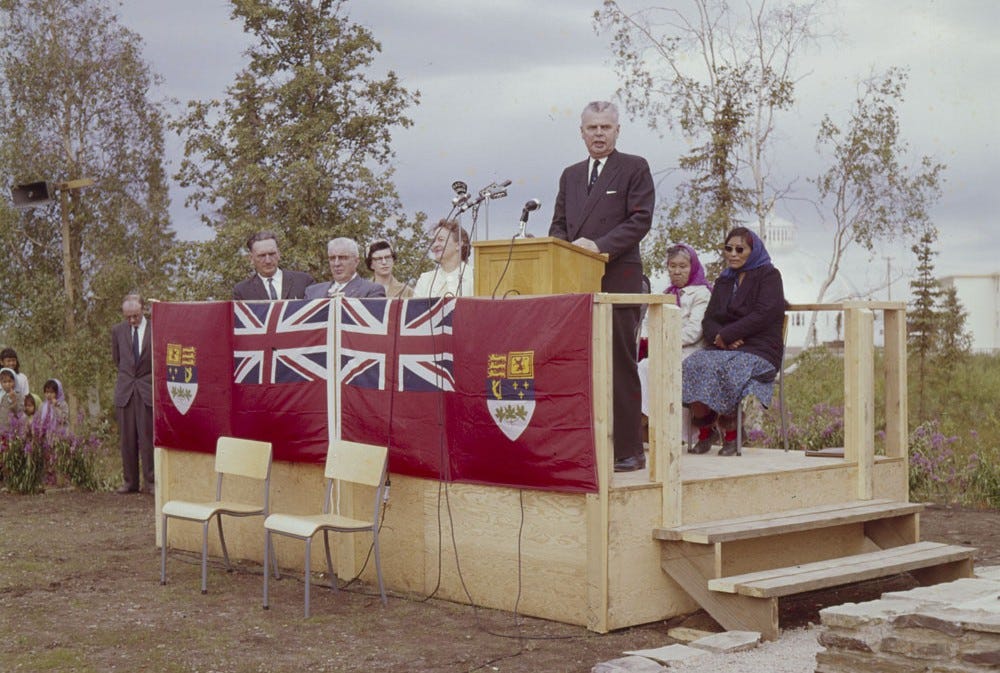
The Great Canadian Flag Debate was not great, and it rarely rose to the dignity of a debate. It began with a false premise, reiterated ad nauseam in the hope that repetition might make it true. This was the idea that, until the adoption of the Maple Leaf in 1965, Canada had no flag.
That assertion would have seemed strange to everyone who had grown up or fought under the Red Ensign. In one design or another, the Ensign had been in common use since the late 19th century. But the claim that it somehow had not been the Canadian flag was little more than a declaration of anxiety and embarrassment.
In the aftermath of the Second World War, the decline and dismemberment of the British Empire seemed inevitable, and the future of Canada almost as doubtful as it was in the early 19th century.
Many among the Canadian Liberal elite resented fighting for the empire a third time, and they disliked what they construed as a condescending attitude from the imperial authorities. Many of the post-war leaders, chief among them Lester B. Pearson and George Stanley, had already developed a chip on their collective shoulder while at Oxford in the 1920s and 1930s, and the result was a desire to stand out from the Mother Country.
In the minds of Canadian Liberals, that desire to stand out took on the lineaments of an emergency amidst the Suez Crisis (1956–57). Canada’s involvement in Suez was not our first foray into peacekeeping, nor was it arguably even the most important such engagement. And yet, like Al Bundy and his mythical four touchdowns in a single game, the Liberal Party will never allow us to forget the moment when Canada stood against the Mother Country and between the great powers of Europe and the Third World.
The flag that flew over that peacekeeping mission was the Red Ensign, a flag which, at least in part, appeared to represent Great Britain. For the Liberal leadership of post-war Canada, that was beyond endurance. Pearson and Stanley would see that no such embarrassment would happen again. Pearson promised to introduce a new flag in the election campaign of 1963, and it was Stanley’s design that won out. The rest, as they say, is history.
But Chris Champion’s memorable book, The Strange Demise of British Canada, shows that that history is not always accurately remembered. It is not entirely true that Canada’s British heritage was rejected in favour of a new, independent civic nationalism.