
Robert Duigan: Lessons from South Africa on protecting property rights
In Canada, it will require overlapping institutions, independent funding, legal creativity, and disciplined cooperation.


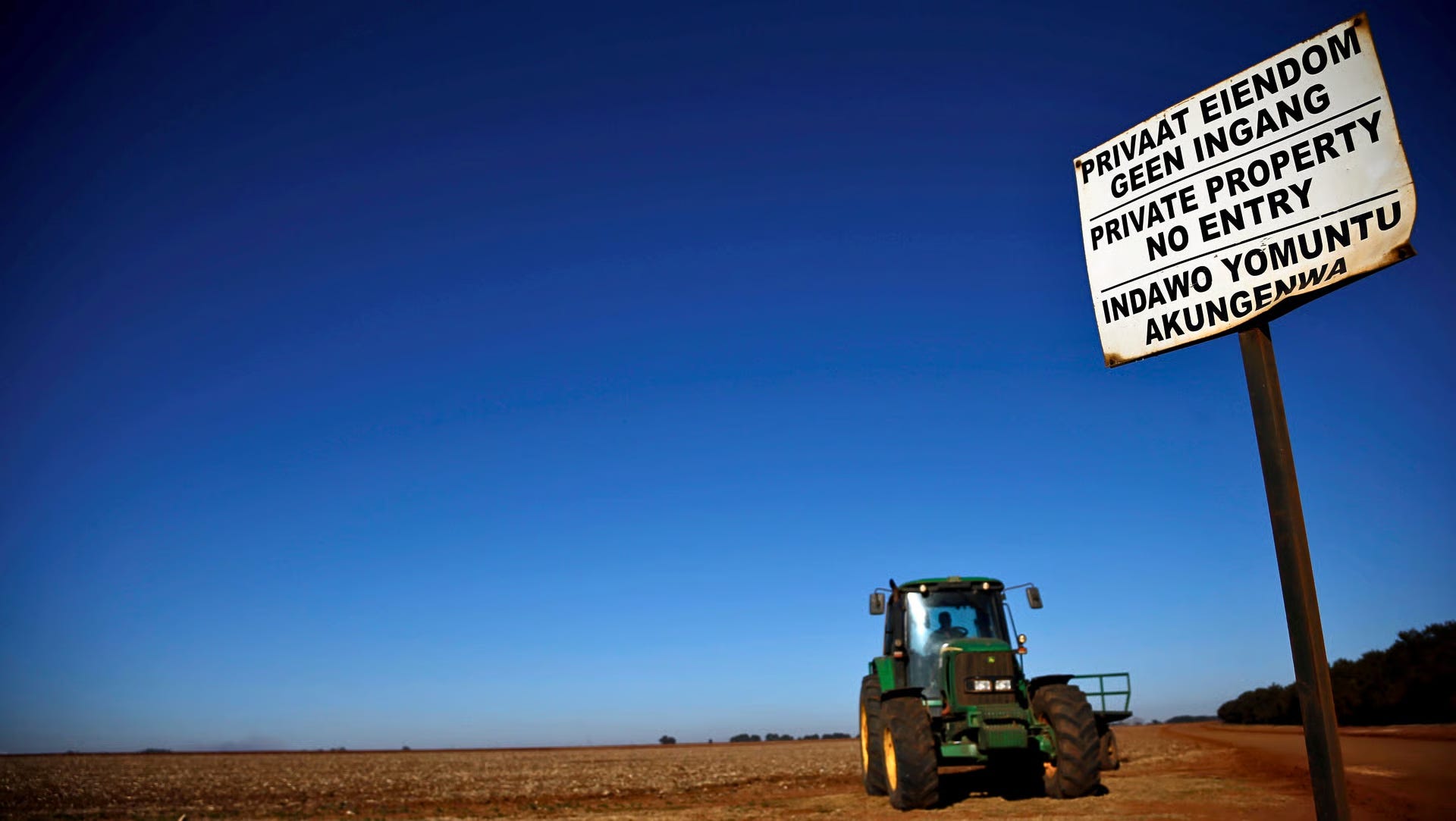
South Africa is well known for its decolonisation-based racial ideology, particularly with regard to its impact on property rights.
Canada, I hear, is facing some similar issues too. With Aboriginal title lands being awarded to small communities with a great deal of leverage over property rights, and with limited political accountability to residents on these lands, the expansion of these territories creates some severe legal issues.
In the case of Musqueam’s title recognition in Vancouver by the Canadian federal government, and last summer’s Cowichan decision from British Columbia’s Supreme Court, the final logic of these peculiar arrangements is yet to be decided by events on the ground.
In Vancouver, the recognition of Aboriginal title in territories claimed by multiple First Nations has proven highly controversial.
For example, following the Musqueam title agreement by Ottawa earlier this month, the Squamish Nation has stated that it is “prepared to challenge any agreement between the federal government and other First Nations that could extend into its territory.”
Last summer, after the B.C. Supreme Court recognised Cowichan title to a swathe of Richmond, the Tsawwassen announced that they would appeal the decision in the courts.
In the meantime, one thing must be established in the minds of British Columbians: reality precedes the law. Any sufficiently organised and focused effort can almost certainly create viable conditions for effective resistance.
In this case, organisation is key. Essential principles must include eschewing support from compromised sources and relentlessly pursuing any legal or tactical advantage, even if it requires the difficult task of discovering sympathetic voices within opposing institutions, and must be pursued regardless of the odds. The cost of defeatism is defeat.
And if we here in South Africa are not yet defeated despite being outnumbered, out-budgeted, and outgunned, then you have as good a chance as anyone.
While South Africa is often referenced for its chaotic land grabs, racial legislation, and the threat of land confiscation, the more useful comparison lies in institutions, elites, and the way ambiguous legal arrangements can be turned into political leverage, rather than mere rhetoric.
In many ways, we in South Africa have most of the ingredients required to make thorough systemic comparisons, under much more severe demographic conditions. And yet, we have managed to cling to our rights quite well, all things considered. At times, this can be quite a lot of hard work, and, to be sure, our circumstances are not directly comparable. The devil is in the details, and little differences in laws and legal attitudes can mean the difference between development and destitution.
One lesson from South Africa is that a threat need not arrive all at once. It can emerge through institutions, incentives, and political habits that slowly narrow the room for resistance.
Expropriation without compensation
“Expropriation without compensation” is the main threat being discussed here. This has involved various legal reforms to create a body of special legal instruments which would allow the state to confiscate land, as it says on the tin, without compensation.
Given the strength of case law in South Africa, and a constitution which mixes socialist positive rights with common law and some flexible property rights, it is difficult to know how all of this will shake out by the time all the pieces are in place. The law matters, but so does the balance of forces behind it.
At the moment, the largest farming corporations, having engaged in Black Economic Empowerment schemes — that is, lending money to largely ruling African National Congress (ANC)-aligned partners to buy their shares — are in a common lobbying structure with the main banking cartel, through two main organisations, AgriSA, the biggest agricultural organisation in South Africa, and AgBiz, the Agricultural Business Chamber of South Africa.
These two are nominally separate but functionally coterminous, and have allegedly struck a backdoor deal with the state so that discounts on farmers’ land will be calibrated to strip them of all their assets while protecting the banks’ mortgage exposure. A member of the ruling ANC is the head of the Banking Association of South Africa.
As a result, these organisations, which are nominally supposed to represent the interests of farmers, have sadistically joked to their constituents that “change is coming”. In recent test cases prosecuted by the government, these organisations refused to offer legal assistance, and fired senior members for objecting to their complicity.
The media are also complicit, consistently punting the opinions of the lead propagandist for big agri, Wandile Sihlobo, as the main expert in all matters agricultural. He is now employed by the Presidency, whose land advisers include Ruth Hall, a former cheerleader for Robert Mugabe’s land seizures in Zimbabwe.
But despite all of this, we still have a relatively accessible legal system, and so much of the process in this direction can still be challenged. In fact, the first tentative example of expropriation without compensation took place in 2018, at the Akkerland farm, which was very soon ordered to receive compensation.
In the second example, a farm in Ekurhuleni, a metropolitan municipality neighbouring Johannesburg, the Metro dragged out the legal case for seven years to avoid compensating the farmer for the land seized in 2019, using increasingly absurd tactics.
The basic point for Canadians is that even where the law remains contestable, organised elites can still work to normalise outcomes that would once have seemed politically impossible.
Organising
Almost any solution to these problems is like sweeping leaves on a windy day if you cannot gain control over your political system. And that, I’m afraid, is the situation in which both of our nations find themselves, and which they must accept for the time being.
We have a great deal of civic organisations whose existence is tied to the success or failure of the efforts to protect property rights, from Sakeliga, a business advocacy group, to the Afrikaner nationalists in Solidariteit and AfriForum, to the small farmers’ representatives at the Southern African Agri Initiative (SAAI), the Free Market Foundation, and so on.
One of the key things about these organisations is that they refuse to be funded by any large corporations. This is not a matter of simple moral principles or some abstract ideological point. Rather, in South Africa, companies with more than 49 employees are required to have black ownership if they wish to contract with the state, or with any company that contracts with the state.
Likewise, in the Western world, state contractors, or even large consumer corporations, are tied into the demands of ESG and the legal risks of America’s post-Civil Rights Act provisions. It gave rise to the programme of private-sector censorship, hiring quotas, and ideological training which is a requirement for access to big capital.
This means that any sufficiently large organisation is inevitably going to have a conflict of interest baked in, and risks financial insecurity for the civic organisation if it challenges a “transformation” policy which a donor likes.
As a result, these South African organisations are funded by smaller companies, individual donors, investment schemes, and creative mutual-aid financing. Together, the Afrikaner nationalist movement known as Solidariteit has over 500,000 members across its dozen or so organisations, effectively drawing direct support from a plurality, if not the majority, of Afrikaner households. The ANC, by contrast, has just 400,000 members.
These organisations have labour unions, work placement schemes, private education initiatives, insurance policies, charities, security operations, publishing houses, cultural institutions, news outlets, business advocacy organisations, legal activist branches, and even a private cooperative bank. This creates the ability to coordinate, to pursue foreign relations, and to challenge any state ordinance with both legal and popular resistance. This does not always work, but the success rate is very high. Should the need arise, the pivot to real territorial power is not as great a leap as it may at first seem.
This is the sort of thinking required when dealing with these circumstances. By all means, push for reform, but in the absence of any easy solutions, every means available must be weaponised to defend your interests. In many cases, this will require negotiation with both sympathetic and hostile political parties, branches of the civil service, and elements of the private sector. Good relations are to be sought out, not approached with fear and paranoia.
And as for the creation of the various organisations and strategies, the general approach has not been to try to create one organisation to do everything alone. The smarter option is mutual assistance between organisations doing their own thing, and gradually drawing them all into greater voluntary cooperation. This allows for flexibility, experimentation, and a sense of security in leadership and autonomy, while driving participation and common purpose.
For British Columbians, this may be the most relevant lesson of all. If property rights are to be defended in a fragmented and ambiguous legal environment, they will not be defended by one heroic organisation acting alone, but by overlapping institutions, independent funding, legal creativity, and disciplined cooperation.
Traditional councils
One of the underappreciated facts about South Africa, though, is that we also have “traditionally governed areas”, analogous to the American Indian reservations, or the Canadian First Nations reserves and title lands.
These territories are derived from traditionally governed areas under the control of chiefs and kings of various kinds in the old Homeland Areas, mostly known as “Bantustans”.
The thing is, these usually function either as big NIMBY zones filled with rural peasants, or as mining sinecures for connected mining companies. Some enterprising groups include the Bafokeng, a Tswana group from the North West Province. They took back their mineral rights from the Bophutatswana state back in the 1980s, and have now become one of the wealthiest tribes in the country.
These people are not by default your enemy, that should always be seen as an empirical and contingent factor.
In our case, there are several cases where popular resistance to mining operations undertaken by chiefs has been curbed by white environmental activists (Xolobeni, for instance). For the Afrikaners, the offer of legal defence against interference by the state has brought about the loyalty of traditional leaders. Another example is the Barolong ba Seleka, who have a history of military and political cooperation with the Trekboers dating back to the 19th century, and who received free legal assistance in winning a succession dispute instigated by the ANC to seize their mineral rights.
These micronations are all potential allies, and potential enemies, and their assistance offers a bulwark against the Kafkaesque world of progressive politics.
Should “Land Back” claims proliferate, ask yourself: is there a competing claim you can back? Is there a partnership that can be struck to guarantee residents their rights? Is there a way of forging a synergy of interests?
In British Columbia, not every Indigenous title holder, claimant, or government will have identical interests. Some may be transactional, some divided, and some open to partnership. Treating all such actors as a single bloc is strategically self-defeating.
A final example
This is the task of generations, not of political cycles. But when a moment of decision presents itself, one must be decisive.
In South Africa in 2010, big business grew wary of the farmers’ movement, which was pushing for a harder line against government land policy and straining relations with the larger commercial chambers. Theo de Jager, who had joined AgriSA’s Limpopo board in 2008, challenged the banks on land reform valuations, but the banks blocked AgriSA from taking a firm stand. Their logic was plain enough: if farms were seized, they stood to lose, but they still preferred an arrangement in which debt was protected while farms remained exposed.
That conflict helped rupture the existing structure. AgriSA’s business chamber drifted away, competition briefly emerged with AgBiz, and the larger corporate players gradually consolidated their policy influence. The final spark for a break came with the Akkerland expropriation case, when farmer Johan Schoeman was given just seven days to clear his property before Easter, an impossible demand in the circumstances.
Agri Limpopo lacked the funds to fight the case and asked AgriSA for help. AgriSA refused. De Jager then turned to Solidariteit and AfriForum, which helped secure financing. The court ultimately allowed Schoeman to remain while the merits were heard, and the state later settled, with punitive costs awarded against the Minister and the Land Claims Commissioner.
But the political meaning of the case mattered as much as the legal outcome. AgriSA responded by expelling allies who had helped Schoeman, and De Jager resigned. Out of that breach came the Southern African Agri Initiative (SAAI), backed by the Solidariteit movement.
Crucially, SAAI did not present itself as an ethnic vehicle, but as a broad representative of individual farmers against corporate cartels and state overreach. That decision gave it legitimacy well beyond a narrower nationalist base, and made it one of the most credible and visible agricultural organisations in the country.
My point here, which is not a sexy one, but is still vital, is that while in-group preference is a vital element of resistance to state domination, realpolitik requires allied strategies and a pragmatic approach to solving tangible problems.
Key to keeping one’s mind clear on such matters is avoiding any sort of idealism, and focusing exclusively on interests and outcomes. One can neither afford cloistered purism, nor liberal universalism. One’s allies must be chosen on the basis of common interest and willingness to act in good faith, and must be dealt with in good faith, with no misunderstanding of intentions.
In my experience working for these organisations and providing them with strategic research, I have come to understand that delicate balance between the need for both an honest confrontation with reality, and an earnest dedication to mutual respect between neighbours.
There is neither room for despair, nor for bravado, just a clear-eyed fixation on the horizon, and one foot placed in front of the other.
Robert Duigan is a political analyst and journalist from South Africa. He does freelance research for various political organisations, and runs half of the local news website, The Cape Independent, where he publishes the specialist monthly publication, PRISM.

What fascinating and unexpected insights!
One of the best articles I've read all week - thank you for this deeply valuable perspective and advice.
And yet I would add: An enormous distinction exists between Canada and South Africa which I hope will play a key role in (eventual) protection of property rights in Canada: Indigenous people are just 5% of the total population and their communities receive billions in funding every year. If and when Canadians as a whole understand this, and pair this information with loss of private property rights due to judicial overreach, that should provide the necessary catalyst for change at the grassroots level.