
Joshua Hart: The good, the bad, and the ugly of 24 Sussex
The politics of neglect, the perils of a design competition, and what 24 Sussex says about us as a nation.


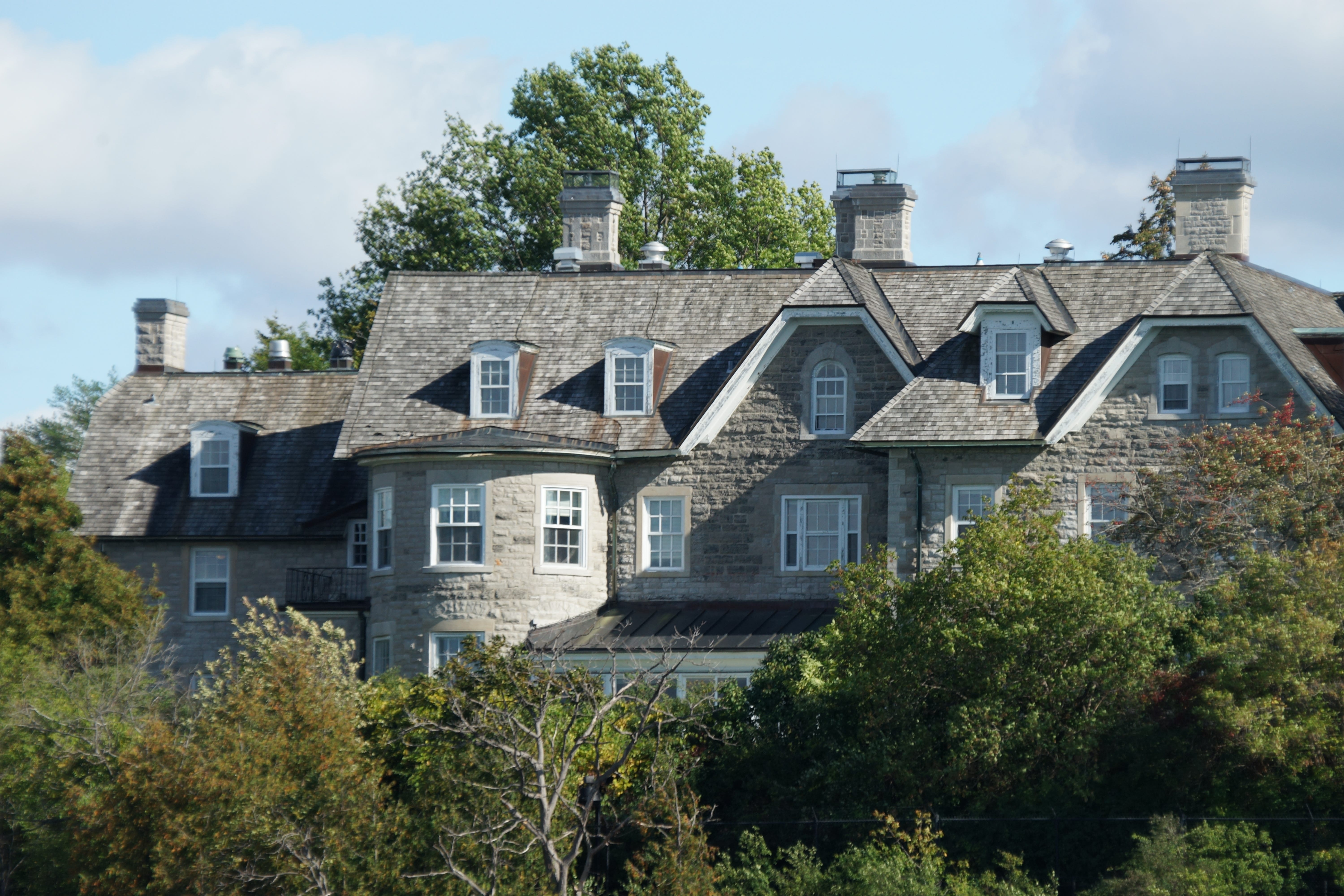
The official residence of the prime minister of Canada has, for more than a decade, remained in a ruinous state. It still bears a sturdy foundation and façade, rooted in the traditions of our past, which have now been largely forgotten. Yet its interior has been gutted and left to fall apart. Fortunately, this need not be a permanent state of affairs.
The prime minister, Mark Carney, has indicated that he expects to be the last prime minister to live at Rideau Cottage, the small two-storey building on the grounds of Rideau Hall, the official residence of Canada’s governor general. It originally served as the residence of the Secretary to the Governor General and later came to house visiting foreign dignitaries. Understandably, any residence ending in the word ‘cottage’ does not have the space or facilities needed to house the operations of the prime minister, and it has become clear that it is not a suitable official residence for the long term.
There is something characteristically humbling about our constitutional arrangement — in which the head of government resides in a small cottage on the grounds of the representative of the Sovereign, rather than occupying pride of place himself. Yet that is a digression for another time.
The good
Mr Carney can and should be applauded for taking the initiative to effect change with regard to 24 Sussex. He has done so by having the Rideau Hall Foundation embark on a national campaign to raise funds from private donors and philanthropic organisations.
This approach is not without its critics. Some have questioned whether a heritage building of this national significance should depend on philanthropic goodwill rather than straightforward public investment. That is not an unreasonable objection. Yet at least Mr Carney is acting. There would be controversy over any approach taken. Spend public money, and you will be accused of extravagance; seek private funds, and you will be accused of abdicating responsibility. The important thing is that, after decades of paralysis, someone has finally made a decision.
The bad
Issues with 24 Sussex have long been apparent, but for more than thirty years, governments of all stripes, facing difficult fiscal decisions, avoided repairs, seeking to avoid a scandal over spending money on what would effectively be their own residence. The easy, politically expedient route was always to do nothing, and, ultimately, one cannot blame any given prime minister too harshly for allowing the residence to fall into further disrepair, as they were simply responding to incentives that did not reward stewardship.
Yet this is more than a question of a building falling into disrepair. It is an embarrassment to Canada. Our head of government has no functioning official residence in which to receive dignitaries, hold private and intimate meetings, host state dinners, or conduct some of the important tasks of the day-to-day work of government.
One can argue that, because 24 Sussex is the official residence of the head of government, there is a duty that goes beyond the purely fiscal — a responsibility to invest in 24 Sussex that transcends what any individual prime minister might gain or lose in the short term. Yes, repairs would cost money. But they would amount to a marginal sum in the grand scheme of government spending, and the cost of continued inaction only grows.
The sad truth is that, for three decades, the question of 24 Sussex was treated not as a matter of national stewardship but as a matter of political survival. No prime minister wanted to be the one caught spending money on what the public might perceive as a personal luxury. And so the building rotted.
That is a failure of vision. A nation ought to be capable of maintaining the home of its head of government without its becoming a political liability. That we could not do so says something uncomfortable about how small our collective Canadian ambition had become.
Dominion Day Sale: From now until July 1st, grab 20% off Without Diminishment.
What is even more embarrassing is that, by delaying the decision, the condition of the residence has only worsened, while the cost has continued to balloon. This short-term inaction has resulted in long-term pain. As with the enormous renovations required for Centre Block, delaying the decision has solved nothing.
The ugly
And so we arrive at the ugly. Mr Carney has announced a national competition to rehabilitate and modernise 24 Sussex Drive. The winning proposal is to be announced by Canada Day, 1 July 2027.
On the face of it, this sounds admirable: Canadian talent; an independent jury; transparency; and competition. In principle, it is not a bad approach.
But it is here that the concern arises.
24 Sussex Drive was built in 1867–68 for lumber baron and MP Joseph Merrill Currier, and was designed by his brother, J. M. Currier. Its original Gothic Revival design has been substantially altered, but the building remains part of a suite of Gothic Revival structures erected around Confederation, alongside Earnscliffe, home of Sir John A. Macdonald, and the Parliament Buildings themselves. It is, in other words, not merely a house. It is a piece of civic architecture that belongs to the story of this country’s founding.
That heritage must not be surrendered in the design competition.
The residence should remain what it was always meant to be: stately, rooted, and recognisably Canadian in the Confederation tradition. Its defining heritage and vernacular character — its stone construction, its surviving Gothic Revival inheritance, and its connection to Confederation-era architecture — should be restored and celebrated, not swept aside in favour of something that merely gestures at modernity.
A home that has stood since the Confederation era should showcase the story and history of this country. It should not become a monument to post-national abstraction or the design fashions of any particular moment. It must remain rooted.
The competition, if handled well, could produce something excellent. But we must hold the line. Whatever is built — or, ideally, restored — must honour the traditional character of the building and interior, maintain the historic façades where possible, and reflect an understanding that 24 Sussex is not a blank canvas to be remade into a new vision of Canada.
It is the home of the prime minister of Canada. It should look like it.
Something bolder
In the end, the story of 24 Sussex is the story of a nation that allowed short-term political calculation to override its responsibilities to its own institutions.
For thirty years, prime ministers of every political stripe looked at a crumbling landmark and calculated that fixing it would cost them more votes than it was worth. Perhaps they were right, in the narrow sense. But a country cannot be governed, and certainly cannot and will not be great, if its leaders are only willing to take decisions whose benefits will be felt before the next election.
The home of the prime minister should be a functioning centre of government. The residence should also be, in the best sense, a source of national pride — not extravagant, but worthy. In many ways, it should represent the continuity of the nation, be rooted in our traditions, and, in a distinctly Canadian way, be quietly boastful of our first principles as a nation.
Mr Carney has taken a first step: the fundraising campaign, the design competition, and the commitment to act at last. This step forward should be welcomed, even if questions remain about the details.
What is needed now is the will to see it through with the seriousness the project deserves. This should not be a renovation driven by postmodernist trends or political presentation, but one driven by a genuine understanding of what this building is, what it represents, and what it should once again become.
As a nation, we ought to have a bolder vision for ourselves than simply avoiding some minor scandal about taxpayers’ money being used to restore the residence of the prime minister. The home is well worth the investment required to restore it and to make it a dignified and functioning seat of government.
Joshua Hart is a fourth-year student studying International Relations at the University of British Columbia, and formerly served as president of the UBC Conservatives.

For more from Without Diminishment and its contributors, follow along on X and YouTube.
Without Diminishment is a project of the Without Diminishment Foundation, a registered non-profit in British Columbia. If you value the unique perspective we bring to Canada’s political and cultural landscape, consider supporting our work with a generous donation.
Yes, and also: strict rules and limits governing the donations. We don't want to see a corporate-named ballroom or a flashy donor wall like you would expect in a museum or arts centre, nor do we want to receive a single penny from outside the country. Right?