
John Bonnett: Fixing a country in search of itself
The insights of Harold Innis. The first in a two-part long-form feature.


In recent years, conservatives, especially Canadian conservatives, have revived a conviction that was self-evident and should have remained self-evident: culture matters. In the closing decades of the twentieth century, culture was an easy concern to demote. Inflation had to be tamed, the national debt curbed, and the vast pretence of the welfare state extinguished. In this decade, however, we have learnt, to our shock, that culture is not a minor concern best kept on the periphery.
The first sign of this is the alarming decline of national cohesion in Canada. We lack the myth and matter needed to contest the things that divide us, largely because our elites have failed to formulate or locate them. Far too many have been happy to serve the empty gruel that is the post-national state.
The second prompt, of course, has been the recent emergence of artificial intelligence (AI). AI, in many ways, is the perfect archetype of creative destruction, one that may prove the undoing of Hollywood. It is likely to be an eruption point in history equal in magnitude to the printing press. It will upend many things, including the ideas, objects and practices associated with cultural expression. As was the case with fire and the printing press, it will be an amoral instrument. Through it, we will know both good and evil. Through it, the expressive toolkit of human life and the expressive possibilities of human culture will expand in ways that cannot be foreseen. And because of it, conservatives have every reason to reconsider how culture can be mobilised to enable Canada to navigate the national, geopolitical, economic and technological storms in which it finds itself.
In his recent encyclical on AI, Pope Leo XIV called upon people of good will to play a role in ‘the construction sites of history’. Conservatives must play their part.
Harold Innis: an under-appreciated resource for conservatives
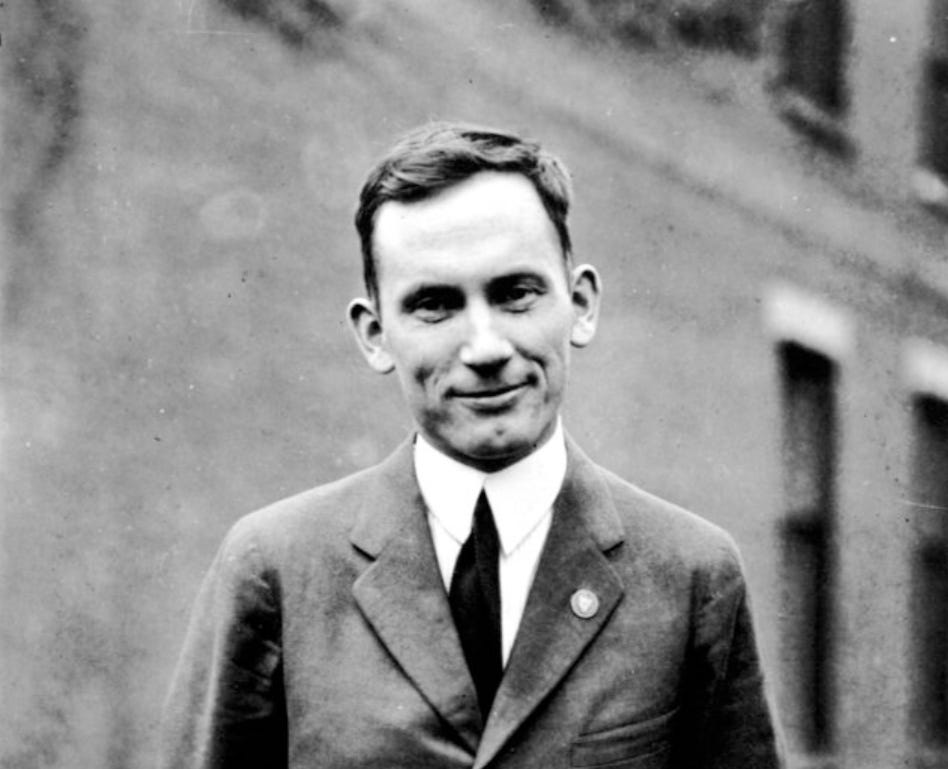
Canadian conservatives are fortunate in that we have an under-appreciated resource to help us think through a cultural policy fit for the twenty-first century: Harold Innis. Innis is not a well-known figure in Canada, yet his writings will always figure in any contemporary description of the Canadian canon. An economic historian at the University of Toronto from 1920 to 1952, Innis first made his mark studying the history of commodities in works such as The Fur Trade and The Cod Fisheries.
In each, Innis advanced the staples hypothesis, the proposition that Canada was operationally and politically distinct from the United States by virtue of the Dominion’s origins in the fur trade. In 1940, Innis shifted his attention to the impact of human communication systems, making them the linchpin of a larger history of the West. Innis scholars continue to debate his reasons for so doing. Some argue it was simply a natural progression from his earlier economic work. His focus on commodities led to an interest in the transport systems that convey them. If you change the terms of human interaction, he realised, you change the nature of the economies and societies that house them. That insight, he would later recognise, also applied to a neighbouring class of technology: communication systems. Other scholars suggest it was the emergence of the Second World War that prompted Innis to move from economic history to communications.
Geoff Russ: The 'nation of values' is a tyranny

Nations will devise any number of values and ideas, both good and bad. But the nation is always older.
A veteran of the First World War, Innis viewed both great wars as indicators of a civilisation undergoing collapse. How is it possible, he asked in Political Economy in the Modern State, that after the relative peace of the nineteenth century, European civilisation should turn ‘from persuasion to force or from ballots to bullets’?
Innis would spend the final twelve years of his life seeking to answer that question. More broadly, in Political Economy and in the volumes that followed, Empire and Communications and The Bias of Communication, Innis would present a history of the West in which the combination of human choice, circulating information and technological evolution had a direct bearing on the cognitive and physical health of nations. Cultures that continually challenged their first premises and innovated survived. Those that rested content in cultural ruts and established practice did not. Innis’ communication writings did not make a huge impact on their initial release. They were terrible reads. They remain terrible reads. But over time, some of Canada’s best and brightest thinkers would come to value his work highly. Marshall McLuhan was not a particularly modest man, but he was motivated to write the ultimate academic accolade in 1964: ‘I am pleased to think of my own book The Gutenberg Galaxy as a footnote to the observations of Innis’. In a 1980 book review, George Grant argued that ‘it would be a shame if Innis did not continue to be read … his writing continually lights up whole areas of human history. And we need this light’.
We do indeed. Innis’ writings were devoted to the destabilising impact of technological change, and his writings are worth considering as Canadians seek to revive their culture and consider the implications of AI for our collective future. For conservatives, Innis’ writings are also worth revisiting because he, in the end, was one of our own. As a conservative, he left a corpus of writings that has important things to say to us today. In today’s feature, I will consider the implications that changes in communication technologies have presented for historical cultures. As we shall see, many of the fears we express now were expressed by predecessors in the past.
In the post that follows, we will briefly consider Innis’ counsel when we are confronted with new communication technologies such as AI: we must adapt. For Innis, prohibiting a new invention was not an option. Remaining passive in the face of a new technology was not an option. The only sane response, he wrote in his major anthologies devoted to communication, was to recognise the opportunities and threats such technologies posed. In short, our only option is to adapt.