
Étienne-Alexandre Beauregard: The culture wars tearing Gen Z apart
More than half of Montreal’s public school students are first- or second-generation immigrants, and many are bitterly rejecting Quebec identity.


Since the 2025 federal election, generational issues have been at the heart of Canadian politics. For the first time, young people supported the Conservative Party more than their elders, an unexpected trend, given that younger generations are usually characterised as very progressive. Yet a difference in priorities, worldviews, and temperament is becoming increasingly visible politically and socially, and this phenomenon is not unique to Canada.
Every generation goes through a different process of political socialisation, depending on the realities one encounters during the formative years of adolescence. As it is clear that attitudes towards immigration also divide the generations, often even within right-wing parties, this factor undoubtedly plays a major role.
Anyone born in the 2000s undoubtedly has a fundamentally different relationship with ‘diversity’ than that of the baby boomers, who are the most culturally homogeneous generation in most Western countries. They grew up during a time of high birth rates and low international migration, whereas Generation Z is experiencing exactly the opposite. In social settings such as school, this naturally gives rise to intercultural relationships that, in just a few decades, have become completely unrecognisable and, unfortunately, much more acrimonious.
Ironically, the person who best described the phenomenon is himself a boomer: Jean-François Lisée, former leader of the Parti Québécois and now a columnist for Le Devoir. In an article that caused a sensation in 2024, titled ‘Anti-Québécois Identity’ (Identité anti-québécoise), he summarised the accounts of numerous teachers in the Montreal area who expressed to him, with dismay, the contempt with which Quebec identity was treated in their classrooms.
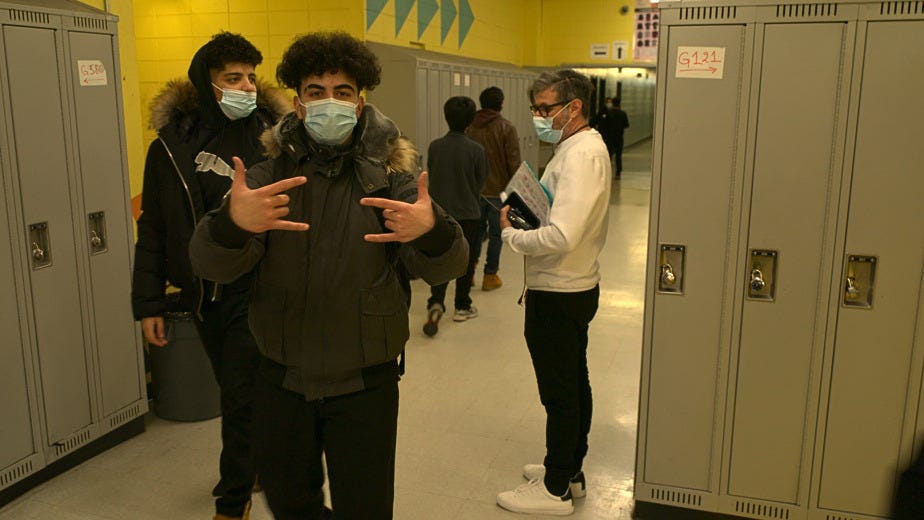
The picture Lisée paints is as depressing as it is alarming: a majority of students from immigrant backgrounds refuse to identify with the Quebec nation and mock the very idea that they themselves might be Quebecers. The ‘Kebs’, for that is the label to which students from the historic Francophone majority are reduced, are described as people who ‘have no culture’, ‘no values’, and whose ‘women are actually sluts’. The documentary Garçons, un film de genre, by Manuel Foglia, depicted the same phenomenon on screen when a group of students from the Gaspésie region visited a multiethnic school in Montreal. The girls, in particular, were shocked to be greeted with insults such as ‘Gaspé wh*re’ or ‘da*n white girl’.
Lisée’s generation did not have a similar experience during their own high school years. That makes perfect sense. The demographics were very different back then, whereas today more than 50 percent of students in Montreal’s public schools are first- or second-generation immigrants, largely from non-Western backgrounds. This marginalisation of the ‘Kebs’, coupled with a public discourse that encourages resentment towards Western civilisation and its values, since these are no longer described as a rich heritage to be shared but as a source of oppression, produces predictable results.
