What do you do when the rules you were taught to live by no longer matter? Most people become frightened, at the very least, especially when their homes and family wealth could be on the line.
British Columbians have every right and reason to worry in the long aftermath of the Cowichan Tribes v. Canada decision, released last August.
The Supreme Court of British Columbia found that the Cowichan people of Vancouver Island holds Aboriginal title to about 800 acres of land in Richmond. Furthermore, the decision found that Aboriginal title took precedence over fee-simple ownership, and the implications are unclear.
Legal experts immediately began warning that, because Aboriginal title is constitutionally entrenched, private landowners are now in a climate of uncertainty regarding title to their land.
On the other hand, the usual suspects repeated their familiar scolding chorus. Calm down, no one is coming for your house.
At the Hill Times, an activist human rights lawyer went further and condemned the warnings about the Cowichan decision as “fearmongering”, and argued that private landowners should not be concerned.
Should they worry when private land title is not clear enough for banks to lend against it, when insurers will not go near their land, or when investors refuse to inject money into the local economy?
Ask those in Richmond who are already experiencing that transformation.
In December, major land deals there fell apart due to uncertainty in the aftermath of the Cowichan decision. A luxury hotel purchase collapsed, and projects are stalling because lenders are unwilling to extend financing.
Hill Times columnists can write as many scolding pieces as they like, but the banks would much rather read risk. Fee-simple is one of the legal pillars of our economy, and its credibility has been effectively, if not intentionally, undermined by the Cowichan decision.
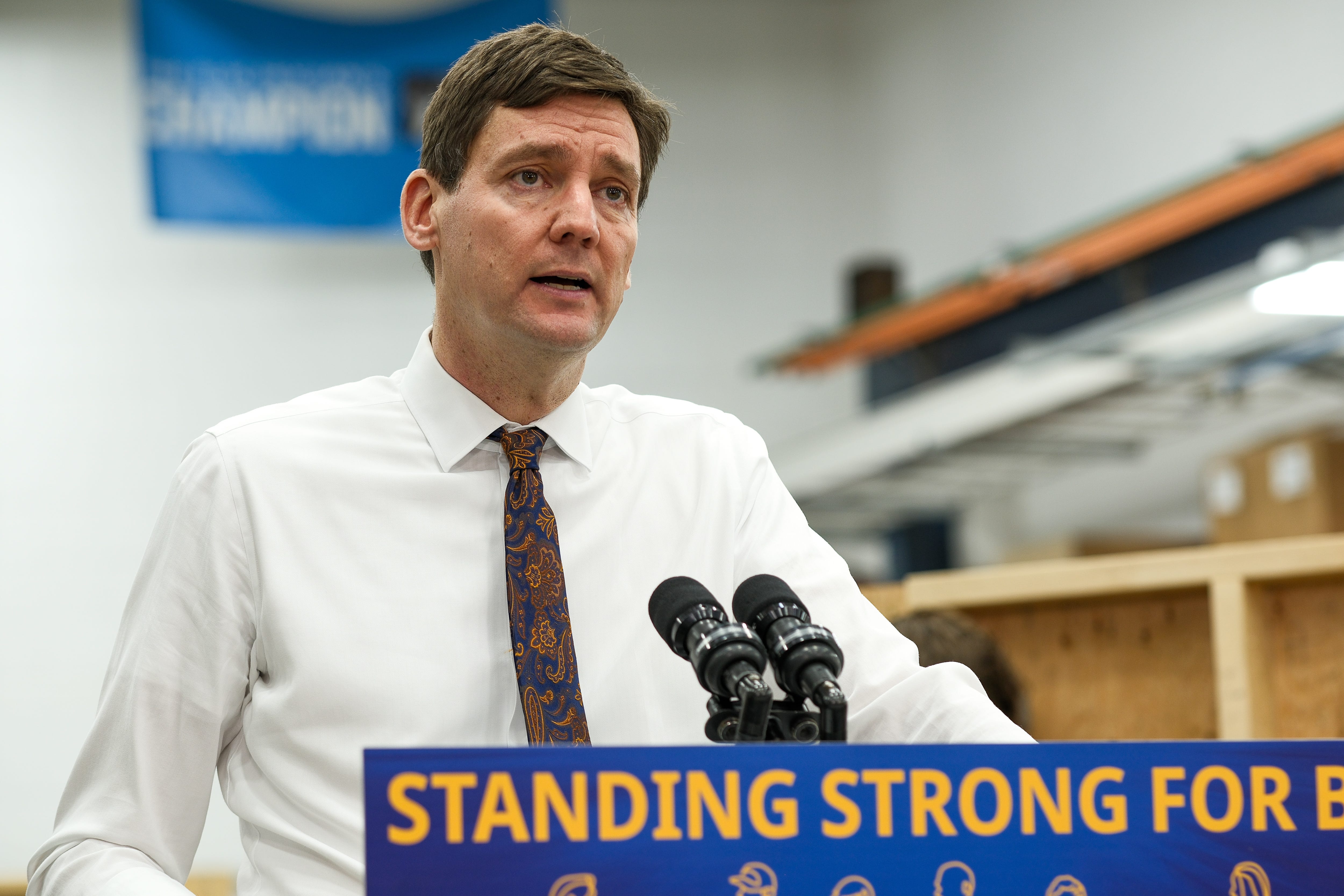
Now, David Eby’s NDP government has opted to umpire the Richmond real estate economy by offering loan guarantees of up to $150 million. Eby himself has boldly pledged to “go to the wall” to protect private property in a bid to reassure business leaders.
The very idea of a government stepping in to backstop private financing is an admission that the situation is very, very bad.
A poll conducted late last year found that 68 per cent of those surveyed believed property owners should be concerned about Aboriginal title overtaking fee-simple private ownership, and this rises to 75 per cent among owners of primary residences across B.C.
None of this has happened in a vacuum, least of all the newfound uncertainty. For years, the public has been told not to believe what they see and not to trust their gut.
Despite some drops in prices, there is still a housing crisis in Canada dating back years. One of the biggest factors driving the spike in prices was mass immigration, and this is well documented.
In 2023, however, Justin Trudeau said that it was wrong to “single out” international students as the cause of the housing crisis, and that “there’s a lot of different factors.” It turned out that analysts working for the federal government had warned in 2022 that the population was growing faster than new housing stock.
Immigration may have been one of many reasons, but it was the biggest, and Canadians were morally bullied for noticing, only to be vindicated in short order.
What about the farce called “safer supply”? Canadians were told that giving out government-sanctioned narcotics to mitigate the addiction crisis was “evidence-based” and all warnings about the program’s corruption were “misinformation”.
The pro-drug-decriminalization NDP government and its allies insisted that everything was workable and dismissed concerns, only for the whole narrative to collapse soon after. The so-called “safer supply” was being diverted and sold so that addicts could keep buying illegal fentanyl.
Now, the provincial government has been forced to require supervised consumption of “prescribed alternatives”, and an investigation into diversion and corruption in the “safer supply” program has been publicly discussed.
The pattern has repeated itself time and again. Obvious problems are denied and concerns dismissed, critics are scorned and stigmatised, and policies are only adjusted after the consequences become too big to hide.
Inflation and pandemic spending are a perfect example. Voices such as the Canadian Union of Public Employees (CUPE) blamed supply-chain disruptions and corporate wrongdoing, rather than government policy.
However, the official record is out there for all to see. Colossal sums of public money were injected into the economy during the pandemic as part of the emergency stimulus programs, with billions of dollars paid out to ineligible recipients in the process.
Which is more believable, the idea that the policy of pumping billions of dollars into the economy had no effect, or that it helped drive higher prices and higher interest rates? A new report from the C.D. Howe Institute concluded that Ottawa’s free-spending during the pandemic pushed up consumer prices, and it bore a lion’s share of responsibility for inflation.
With all of that in mind, British Columbians should not simply sit back and relax about dramatic changes to land title and, possibly, their property rights. The stakes of the long aftermath of the Cowichan decision are higher than simple politics, and remaining quiet is not an option.
Homes are how millions of Canadians store their life savings, and fulfil other purposes, such as serving as collateral for small businesses. You can take a risk and open a shop by borrowing on the value of your house, or use the money to send your child to a good school.
The courts and the government have the power to remake the rules of British Columbia and have a duty to be clear about their intentions and the outcome. If the NDP thought they could renegotiate the age-old laws of land use and democratic governance, they should have expected pushback and resistance.
It is not racism to worry about private property and who truly owns the land your house sits upon.
Unless the Cowichan decision is narrowed, clarified, or overturned on appeal, British Columbians have no reason not to treat the changes to land and title as threats to their way of life. It will not be an academic, niche debate among lawyers, but the defining political, legal, and cultural debate of this era.
Geoff Russ is the Editor-at-Large of Without Diminishment. He is a contributor to a number of publications, including the National Post, Modern Age, and The Spectator Australia.