
Bradley Haley: The language of the United States is English, and only English
Is America so exceptional that it could live another 250 years without its people or language?


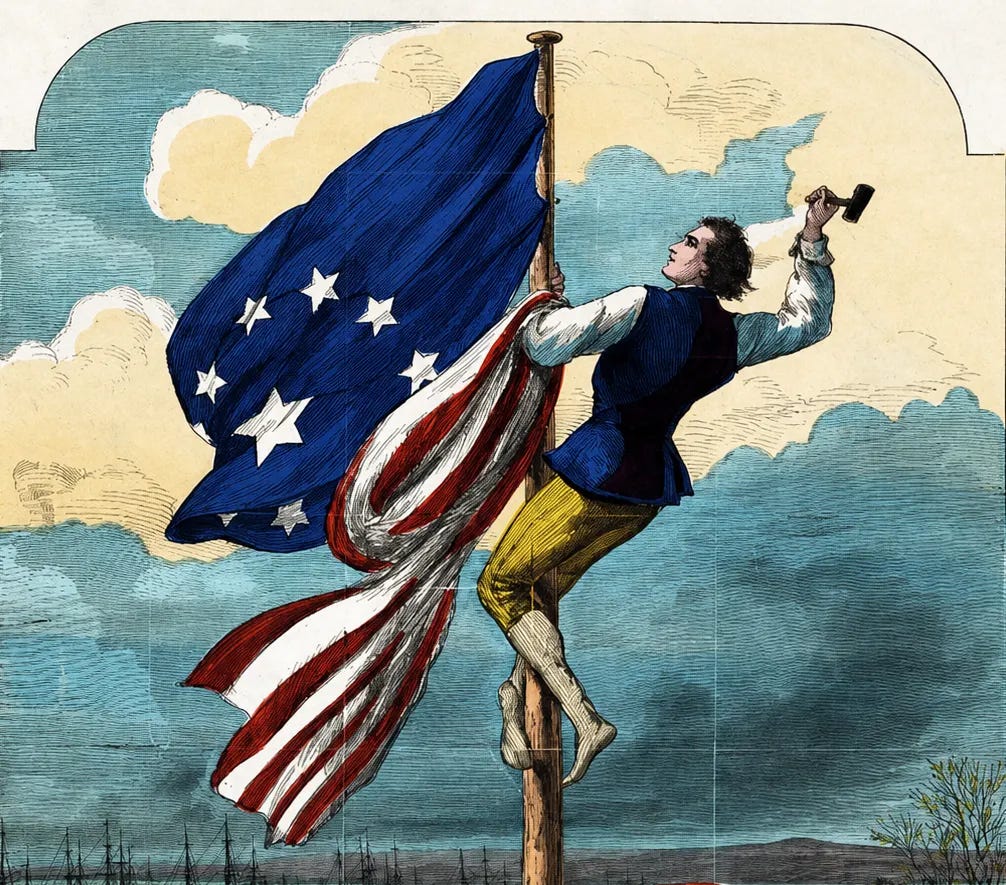
Last March, President Donald Trump signed an executive order, ‘Designating English as the Official Language of The United States’. Not many years ago, such an executive order would likely have seemed unneeded, even bizarre. It would be like Mexico declaring Spanish its official language — something Mexico has never actually done. Yet, such a measure was necessary in America — especially as we prepare to celebrate the 250th anniversary of our Declaration of Independence this summer — as a rebuttal to the Left’s idea that language is merely an exercise of power.
According to the President’s executive order, the goal of declaring English as the official language of the USA is to ‘promote unity, cultivate a shared American culture for all citizens, ensure consistency in government operations, and create a pathway to civic engagement’. These reasons are both practical and philosophic.
The practical reasons are obvious. Attempting to administer government services in dozens of languages is a logistical nightmare, and accordingly President Trump’s executive order revoked a Clinton-era order that required agencies to do just that. The millions of illegal immigrants that the Biden administration allowed to flood our country revealed to many Americans that cultural assimilation is not optional to have a functioning society. Putting a dozen languages on street signs is obviously not realistic, but more importantly, doing so would undermine national unity.
The most important part of this order — and the most politically relevant part as we prepare to celebrate 250 years of American independence — is more philosophic than practical. Because America is the flagship of the West — the steward of the Western tradition that began back in Athens, Jerusalem, and Rome, and was baptised by Christianity — speech is central to our broader civilisational order. In the West, we believe in the consent of the governed, which requires the people to actually give their consent, and consent requires speech. Because we are rational creatures, we have free speech so that we can ascertain the truth.
In this view, speech and language are not merely tools that enable us to more efficiently communicate our base desires. Language is not just a way of explaining what we want instead of physically beating each other. Instead, language is an expression of the imago Dei — it is how we participate in the highest elements of human existence: the spiritual, the political, the artistic, and so on.
Yet, in the modern world, we often treat language as a merely technical, almost animalistic, exercise. The basic layman’s view of the history of language is that a long time ago, brutish, proto-human creatures drew symbols on cave walls and then finally, some two hundred thousand years ago or so, we humans evolved and developed the larynx that allowed us to vocalise symbols for ideas and objects. Over time, through a process I am far from qualified to explain, languages evolved and multiplied until we reached a point where I am invited to press a number for which language I would like when I call an automated customer service line.
If language is only the fruit of a godless, secular, evolutionary system, then language is subject to either mere power (i.e. the most evolved and powerful cavemen set the terms on which the others communicate) or mere social convention (i.e. terms can mean whatever the people want them to mean at any given time). This is, of course, how the Left views language. Powerful institutions or public opinion radically redefine the most basic terms of society: man, woman, marriage, and so on.
Yet, this is antithetical to the Christian, and, therefore, Western tradition. In the West, our Christian heritage teaches that we speak because we were spoken into existence by the God of Genesis, and we talk with each other because we were made in the image of a communion of persons. In the Christian narrative, the origin of language is not a kind of social contract or a strong-man theory. The origin of our faculty of speech is our very creation — God Himself speaks, and thus we speak, and, as Aristotle observed, this is where politics begins: speaking together about the highest things. Language is not the handmaiden of power, but real and legitimate power comes from the ability to lead our friends and neighbours to the happiness that comes from a life well lived.
There is this idea out there that America is unlike every other political system — that our ideas are so unique and exceptional that America will just go on regardless of what people inhabit our land or what language we speak. Yet, this is not true. America and the English language are deeply connected, not just at a practical level, but at a metaphysical one. Our Declaration of Independence and Constitution are in English. The Federalist Papers, where our Founders persuaded the people to ratify the Constitution, were published in English, and the epitaphs on the tombstones of our revolutionary heroes are in English.
As we celebrate 250 years of America, in spite of the Left’s radical immigration policy and assault on our common heritage, America is still an English-speaking country. English is part of our national identity, not because it is the most efficient mode of communication, but because America is the standard-bearer of the West, and in the West, we believe that talking together about the highest goods — about God, family, and nation — is how we build a political order that will endure for 500, or even 1,000 years.
Bradley Haley is a George Washington Fellow at Hillsdale College where he studies English, and he is the Founder of New Guard Press, an online magazine dedicated to charting a course for American renewal.

This is a wonderful essay, perfect for a splendid day.
I may have to read it a couple more times to make sure I consumed the full thrust, but it remains a joy to read.
Well done!!