
Geoff Russ: Better a petrostate than a welfare state
Albertans, and all Canadians, should profit from their land, not be treated as clients of a distant bureaucracy.


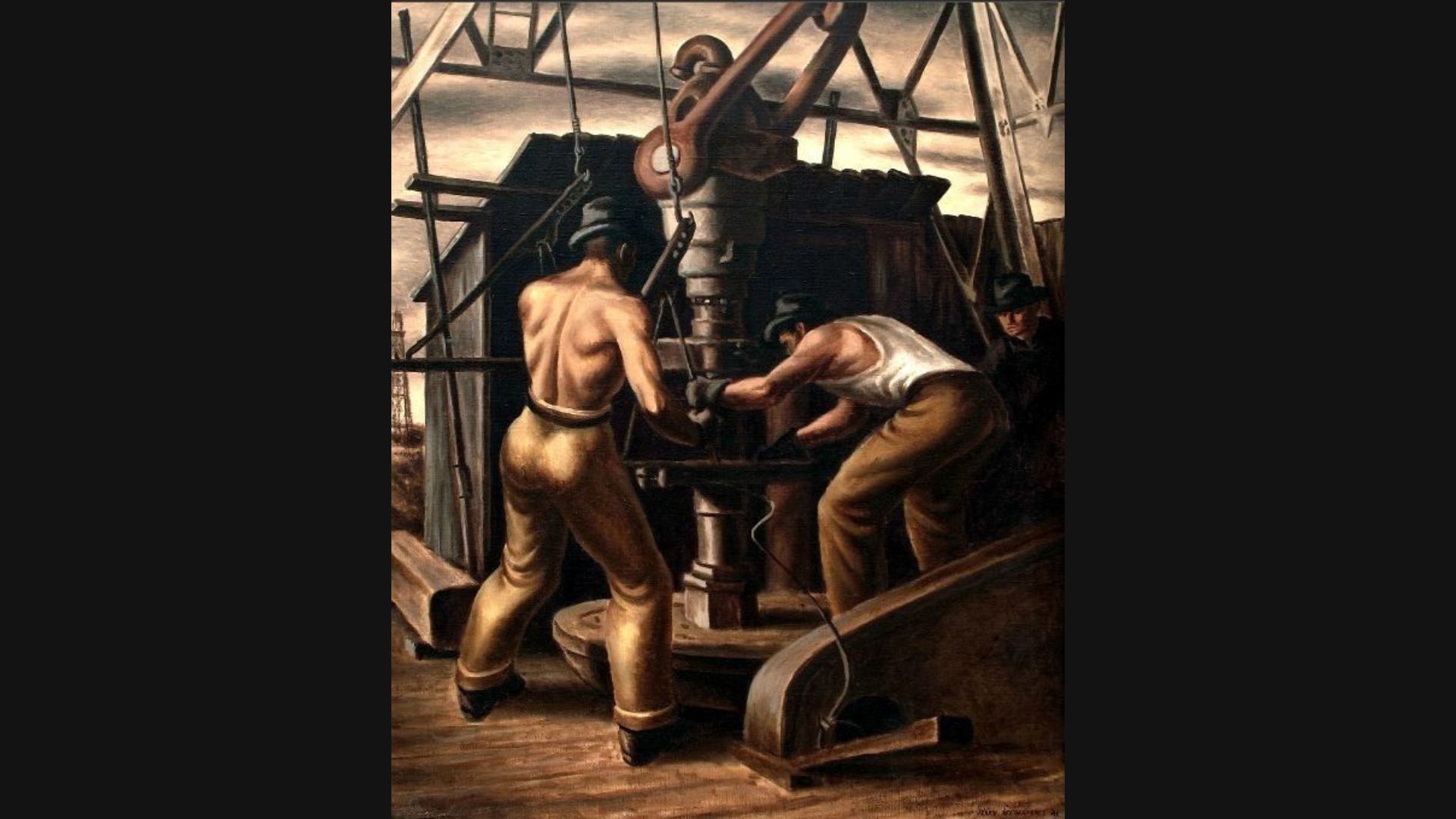
Is it so bad that Canada is a petrostate? After all, the country certainly is one.
Canada’s exports, and the growth and backbone of its economy, depend upon oil from Alberta, and natural resources more broadly.
Many self-hating critics treat this state of being as a danger, as if becoming wealthier from the resources beneath our feet is something to be ashamed of. It is not a credible position, but its proponents have made careers out of doubling down on it. To them, one of the alternatives to a healthy, staples-export economy is dependency on the federal government.
Canada is undergoing a painful era, but it remains relatively rich because of oil. Our most prosperous years have been during resource booms. Boom and bust are not a perfect arrangement, but we have certainly never flourished by lionising administration and state control of the economy.
The federal government under Mark Carney can talk all it likes about dynamism and major projects, but it retains the same bureaucratic ideology that has invigorated the Liberals for over half a century. That ideology consists, in part, of redistributing money levied from taxpayers and debt to expand the bureaucracy. It treats administration as morally superior to productivity.
Canada is better as a petrostate than a welfare state.
Ottawa’s political language deliberately muddles a key distinction. A state with welfare is different from a welfare state.
If welfare is broadly defined as taxpayer-funded provisions delivered by the state, then most modern, Western governments have a form of it. These include healthcare and schooling, which would otherwise be provided at cost and on demand to citizens.
While welfare programs are perfectly reasonable objects of debate, they are not necessarily the problem. The problem is when welfare becomes the ideology and logic of the state, rather than a simple function. In such a welfare state, bureaucratic guardianship becomes a selfish leviathan that sees its own expansion as an absolute good.
Canada has been such a state for as long as most living Canadians can remember. Pierre Trudeau’s ascendancy to the role of prime minister in 1968 is often cited as the beginning of this regime.
While Trudeau Sr. certainly baked progressivism into Canada’s Constitution and the public service, the transformation arguably goes further back, to World War II, when the Liberal government embraced interventionism in the style of Franklin Roosevelt’s New Deal.
However, that timeline is another discussion.
What matters here is that Canada was once a simpler parliamentary federation, where the government taxed little and provided little, leaving room for citizens and communities to hold society together through institutions like the Church and voluntary associations.
When Trudeau finally exited Ottawa in 1984, he had led Canada’s transformation into a country that elevated the courts and bureaucracy to the level of Parliament in terms of power. Rights, instead of culture, became the essence of an official, but invented, Canadian identity.
In 2022, over 40 per cent of the Canadian economy was tied to the public service between Ottawa and the provinces. Since 2015, the number of people employed by the federal government has grown by 110,738 people, revealing Mark Carney’s vaunted job cuts of 16,000 positions over three years as minimal.
This army of administrators and officials import nothing, save for fighter jets, export little of note, and sell even less in a competitive marketplace. Corporations in Texas or Japan do not wire money to Ottawa because Crown–Indigenous Relations and Northern Affairs Canada, or CIRNAC, has called another meeting.
Trading partners want to do business because of the work performed by miners, manufacturers, and oil workers.
This is why Alberta and its oil economy are essential, for both Canada and conservatives across the country. Calls for the Conservatives to cease being an ostensibly Western-centric and pro-Alberta party are profoundly unserious, for the province represents the antithesis of the Canadian welfare state’s ideology.
Countries must produce something that the world actually wants to buy, and the world wants Canadian oil and gas, whether from Alberta or other provinces like British Columbia. Natural resource products make up more than half of Canada’s total exports of goods and services, with oil and gas being by far the largest share.
The demand for Canadian resources is not new, but ongoing conflicts in Russia and the Middle East hammer home the need for a stronger Canadian energy alternative.
It is backward to treat the characterisation of Canadians as “hewers of wood and drawers of water” as an embarrassment. For those who do, the outsized importance of the resource economy is taken as a sign that we are not clever or inventive enough, that we still do not do enough work from computers in a cubicle or a home office.
Respectfully, countless overleveraged AI start-ups are not going to lift Canada out of its cycle of low productivity. What built Canada and made it rich were staple exports, whether fur and timber in the early 1800s, or oil and gas today.
The fact that Alberta is the biggest staple producer in Canada makes it the most Canadian of our provincial economies in many respects, especially if one considers the bureaucratic state in Ottawa to be a perversion. Oil and gas bring more than mere exporting. There is also engineering and technological innovation as the energy industry continues to modernise.
Canada’s own oil and LNG operations are among the world’s most technologically advanced, with LNG operations on the B.C. coast leading the way in innovation, efficiency, and operational emissions reduction. Imagining the oil industry as dirty shovel work is a perception that is several decades out of date, but even if it were the case, it would still not be something to shun.
Recent events have only made the importance of Albertan oil even more apparent. The American strikes on Iran and the consequent closing of the Strait of Hormuz have caused oil and gas prices to spike around the world.
The Western world has always been vulnerable to strategic blackmail from the Middle East because of energy markets. Whether it be the first Oil Shock in 1973, or the impacts we are seeing today, we and our allies depend on the decisions made in Tehran or Riyadh.
If the world “needs more Canada”, as Barack Obama famously said, expanding our capacity to export energy with new pipelines and LNG terminals is the most important way to accomplish that.
Canada is democratic, reliable, and internally stable. The case for Canadian oil has been made for those very reasons many times, even if it has been ignored by the Liberal government.
Alberta has the reserves and the expertise, while the rest of Canada has the geography to turn us into the leading energy supplier to the democratic world. Properly understood, conservatism should include conserving and reinforcing our place as a staple exporter, not managing a Liberal welfare state and its bureaucracy.
We should be seen as free citizens, not clients of a progressive public service, with entry into which is often cut off to Canadians from blue-collar and unilingual backgrounds.
Trudeau-style welfare, even if it is under a new prime minister, treats the bureaucrats as a priesthood, and treats their state as the true shepherd of Canada. The conservative counter to this is to insist that Canada exists to protect Canadians, and to make it possible for them to build, trade, and profit from their property and the land.
If that makes us a petrostate, cheers to that.
Geoff Russ is the Editor-at-Large of Without Diminishment. He is a contributor to a number of publications, including the National Post, Modern Age, and The Australian Financial Review.

Bravo! Yes, to free citizens, not clients of a progressive public service!