


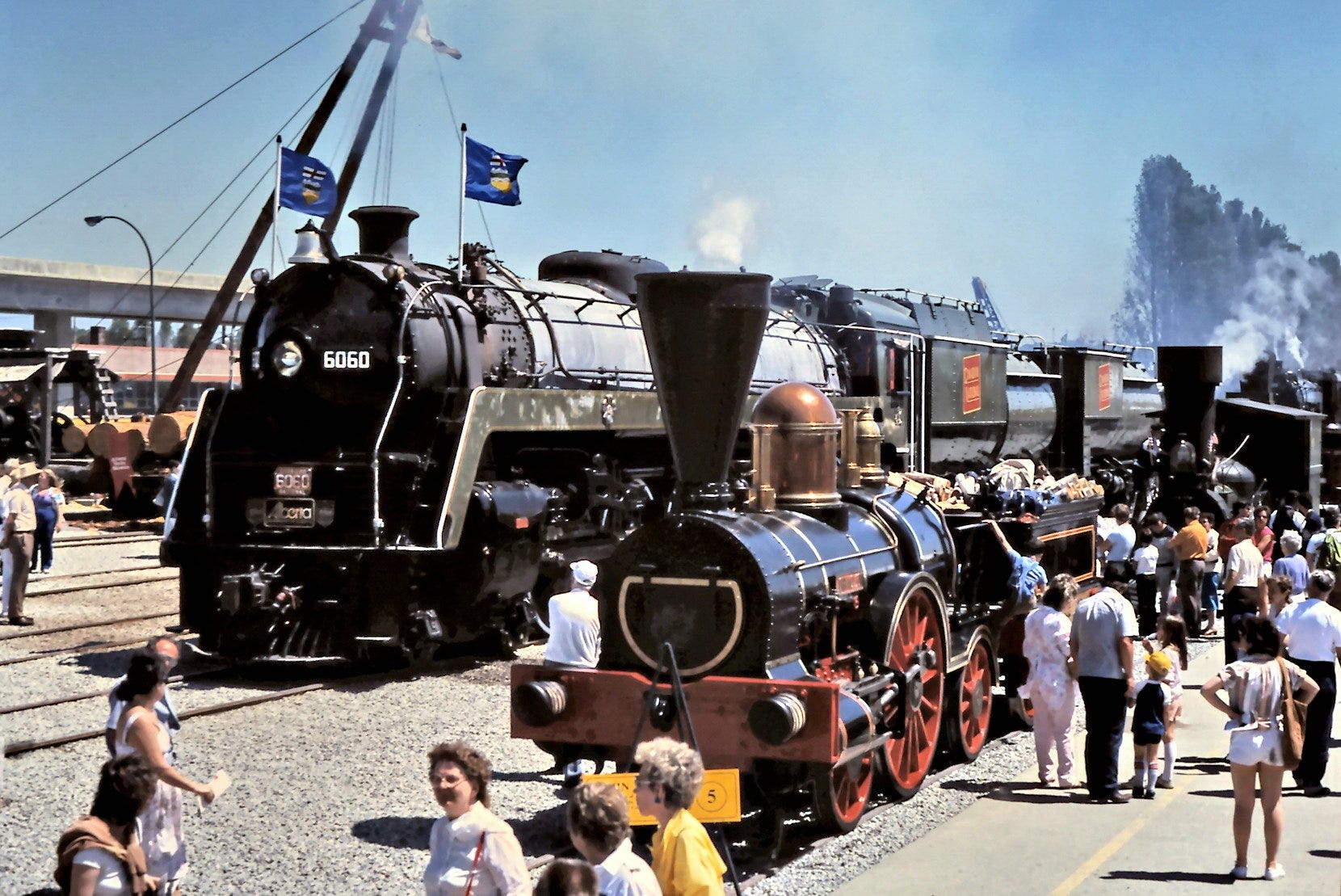
Have you seen those nostalgia edits popping up on your social media feeds, or the clips showing vintage footage of Canada? They are bittersweet to watch. It could be Toronto’s Union Station in the 1980s, a bright Calgary street in 1973, or people at Vancouver’s Expo 86.
In addition to being bittersweet, they can be more than a little radicalising. How can you live in modern Canada and not yearn for years long gone sometimes?
These edits move people, and not simply because the cars, clothes, and architecture they portray were objectively superior. The videos show a true country and a confident, recognisable nation.
Admittedly, the videos are often political propaganda, and curated to get a rise out of viewers. That does not delegitimise them, for propaganda is most effective when it contains at least a few grains of truth.
Like the reels in The Man in the High Castle — a comparison made by one X user — that show an alternate history of America, the edits show snippets of a world that looks foreign or lost, but remains familiar. The difference is that The Man in the High Castle is a fictional story, and, within that fiction, the reels show a world that never existed. By contrast, the nostalgia edits and old footage show a Canada that many of us can remember, and one that feels like it was squandered.
In thirty seconds, the clips make an impact that an essayist might need 1,500 words to match. Elegant city gardens, stately department stores, parks full of children, and men in tailored jackets of fine quality give them an enviable aesthetic. It all looks gloriously Canadian, North American, and dignified all at the same time.
The right in Canada often fails to convey a sense of idealism, and these clips buck that trend. Critics will scoff and sneer that the clips show a “misleading” image of a country that “never existed”, but many of us know that to be spurious.
Most people over 30 have seen their country change dramatically in their lifetimes, as their neighbourhoods transform in ways that they never voted for. Our own grandparents lived to tell us about how things were different in our country by showing us scrapbooks and home movies over Christmas. You can easily access the diaries and memoirs of deceased Canadians detailing what it was like to live in Old Canada.
You can imagine those people queuing up properly for public transit, lowering their voices on the metro or bus, and dressing to the nines while out in public. They certainly could go about their day assuming unfamiliar people lived by the same code.
Was it stodgy, boring, provincial, and culinarily bleak? Perhaps, but Old Canada’s superficial shortcomings did not justify its replacement in the second half of the twentieth century, a time of cultural subversion and social revolution led by the post-war generation.
As Michael Bonner wrote:
“The familial and social bonds, even the hereditary culture, of the 1950s stifled them, and they still rejoice at their effacement. They cannot see how little is left now, and view the demolition as unfinished. The disorder brought by the quest for freedom can, in their minds, only be remedied by more freedom: more deregulation, more immigration, more license, and a more aggressive war on norms and culture.”
Those consequential indulgences were built on the legacy of a great history and heritage. Their rebellion was staged from the comfort of a country that had the good habits of a common culture, with particular languages, religious inclinations, and strong families who instilled etiquette and a particular way of doing things. That generation found a champion in Pierre Trudeau and his family, who have never ceased trying to gaslight Canadians into thinking that their country has no real culture.