
Alex MacDonald: This Victoria Day, remember who we are
Step back from the doldrums of modern life to recognise the greatness of Canada's heritage.


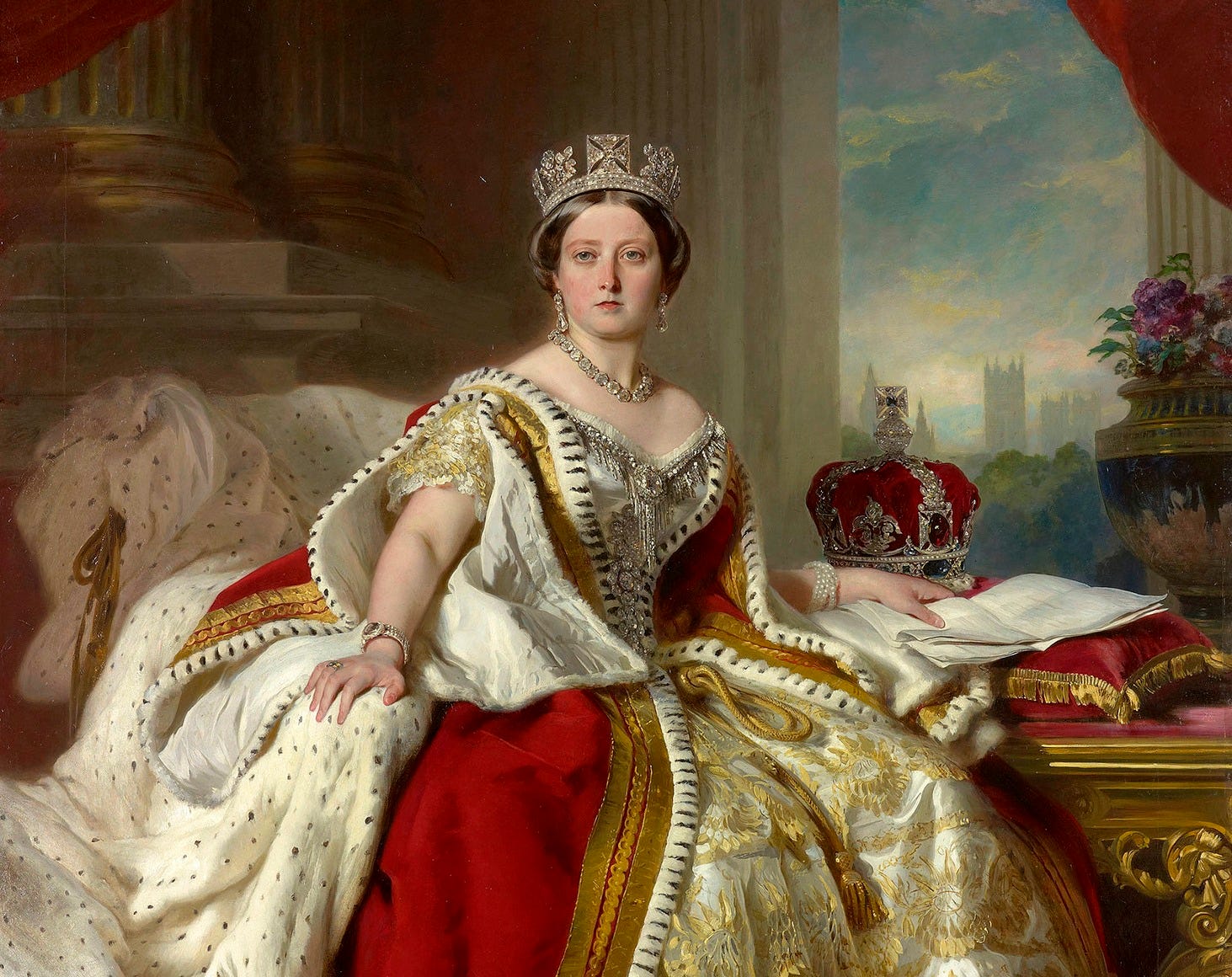
Queen Victoria, Canada’s first queen and second-longest-reigning monarch, was known affectionately as the Mother of Confederation, the namesake of two provincial capitals, and the monarch whose name is used to bestow the highest military honour in Canada and the United Kingdom.
Despite being the reason for the May long weekend in most provinces across Canada, none of the aforementioned traits or recognitions now appears to be synonymous with what has become colloquially known as ‘May Two-Four’ or ‘the May long’.
Rather, this yearly holiday, which often falls midway between Easter and Canada Day, has become associated with the more mundane — the unofficial opening of summer, the cottage-opening weekend, fireworks, and beer. All enjoyable, no doubt, but rather sterile stand-ins for the true rationale of a holiday that pre-dates Confederation and is uniquely Canadian.
The Sovereign’s birthday has been celebrated in Canada since the reign of Queen Victoria (1837-1901). 24 May, Queen Victoria’s birthday, was initially declared a holiday by the Legislature of the Province of Canada in 1845.
The holiday continued uninterrupted after Confederation in 1867. Upon the death of Queen Victoria in 1901, Parliament recognised the holiday through legislation and gave it its name. Further legislation in 1952 standardised the holiday to the Monday preceding 25 May.
The Queen’s 63-year reign, now appreciated as the Victorian era, undergirded Canada’s evolution from colony to nation while also backstopping Britain’s imperial hegemony and transformation through the Industrial Revolution.
Fittingly, Queen Victoria has more places and features named after her in Canada than any other historical figure — Victoria, British Columbia; Regina, Saskatchewan; Victoria Island in the Canadian Arctic, Canada’s second-largest island; Queen Street in Toronto; Victoria College at the University of Toronto. The Royal Canadian Regiment still wears Queen Victoria’s royal cypher (VRI, Victoria Regina Imperatrix), to name but a few.
The symbols and namesakes are not the product of an unwarranted mythology. Queen Victoria played a pivotal role in the foundation of Canada and in shaping the domestic institutions and traditions we now take for granted.
Not only did Queen Victoria assent to Confederation and designate Ottawa as the capital, but she also helped to unite the colonial factions that would emerge as Canada. Upon Queen Victoria’s accession to the throne in 1837, revolts broke out in the colonies of Upper and Lower Canada, and civilian militias formed against the local administrative elites.
In response, and in a spirit of reconciliation, Queen Victoria granted amnesties to the rebels in both colonies and then tasked the Governor General of the day, John Lambton, 1st Earl of Durham, with investigating the rebellion.
John Lambton produced what became known as the Durham Report, which most prominently recommended the unification of Upper and Lower Canada into the Province of Canada and the introduction of responsible government. While the unification of Upper and Lower Canada promptly occurred in 1841, responsible government was only later adopted through Confederation in 1867.
It was also Queen Victoria who was the signing monarch for most of the Numbered Treaties, which recognised the Indigenous nations of what is now northern Ontario and the Prairies. These treaties established nation-to-nation relations, provided constitutional guarantees, and facilitated the mostly bloodless westward expansion of Canadian sovereignty.
It is no wonder that the central tower of Canada’s first Parliament building was named the Victoria Tower, in a town which a British MP referred sarcastically to as ‘Westminster in the wilderness.’
While Queen Victoria may not have been involved in the day-to-day affairs that forged Canada in the manner of the Fathers of Confederation, she nonetheless carried the weight of the Crown and stewarded the Empire that ultimately bequeathed what we know today as Canada.
The Canada which Queen Victoria set in motion has drifted from its roots and waned in its pride, but such cultural decline is a choice. Our heritage, traditions, and shared identity need not be subjugated to a pseudo-culture that produces atomisation and social lethargy in the name of liberty and consumption.
Edmund Burke is often called upon by those on the right in the name of generational fairness, to lower debt levels, and to enhance responsible and sober policy-making. However, Burke’s ‘Primeval Contract of the eternal society’, which emphasises the inherent linkage between the dead, the living, and those yet to be born, is of greatest importance when it comes to our cultural inheritance.
As we collectively become more detached from our history, we adopt a position of cultural rent-seeking in which we only draw down on the riches of our inheritance, leaving less and less to be passed on.
A country that does not know itself cannot celebrate itself. The shift from celebrating Victoria Day to May Two-Four is emblematic of a nation that has become collectively deracinated. We have gone from celebrating the grandeur of the Empire that bequeathed this country to us to an individuated, consumer-driven ritual devoid of any meaning. Rather than giving honour and praise, we now just take a moment’s reprieve from the doldrums of modern life, with no reference to what Canada was or what it has become.
If Queen Victoria is the Mother of Confederation, then we are collectively her children, estranged or otherwise. True matriarchs deserve their due honour and praise; Queen Victoria is no exception.
Alex MacDonald works for Counsel Public Affairs. He formerly worked in the United Nations, the Government of Alberta, on Parliament Hill in Ottawa and in private industry.

I have read this splendid essay three times, and I am still gleaning both enhanced wisdom and pleasure from each paragraph.
“The Canada which Queen Victoria set in motion has drifted from its roots and waned in its pride, but such cultural decline is a choice. Our heritage, traditions, and shared identity need not be subjugated to a pseudo-culture that produces atomisation and social lethargy in the name of liberty and consumption.”
When I was a young fella, we were steeped in the beneficence of our British Heritage, of being on the right side of history for hundreds of years, and for the Country that sprung forth from the dual founding and the grand vision.
We were taught we stood on the shoulders of giants, and rightfully so.
Whether or not the dust can be shaken off that wonderful gift is ours to collectively decide. It is there to be reclaimed, should we decide it is worth the effort.
Alex, congratulations on an absolutely riveting essay.
Bravo.
Thank you. She also named British Columbia and New Westminster. She is the reason for white wedding gowns. But she wore black for the last 40 years after the death of her husband Albert. A true symbol of duty, a life of respect and dignity. Thanks for keeping the memory of our Mother of Confederation alive.